Water-Based Adhesive Systems in UD Prepreg Machine Design: A Technical Guide to the KT-LH-1800 Platform
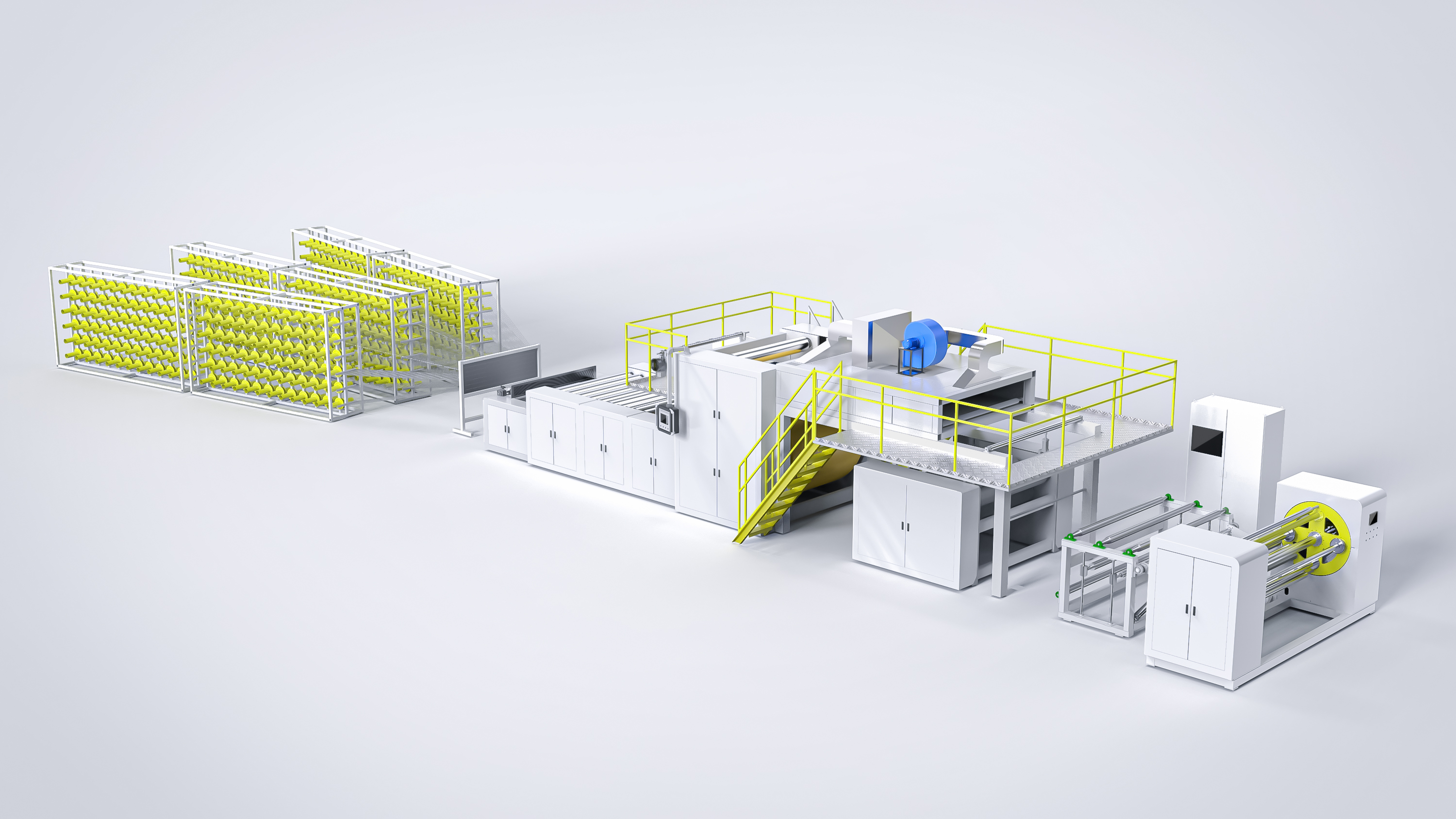
The KT-LH-1800 UD prepreg machine applies a water-based adhesive by dipping or coating, then consolidates the spread filament band against an external circulating thermal oil roller.
Introduction: Why the Adhesive System Defines a UD Prepreg Machine
The adhesive circuit, not the frame, decides whether a UD prepreg line produces material a ballistic laminator can actually use. On the KT-LH-1800 platform, that circuit is water-based. KT-LH-1800 is the model designation Jiangsu Kuntai Machinery Co., Ltd. applies to several UD lines in its range, including the UD Aramid prepreg machine, the UHMWPE prepreg machine and the UD prepreg impregnation machine, and each of those published specifications lists the same adhesive architecture: water-based adhesive, dipping or coating gluing, and mechanical multi-roll plus profiled spreading.
This guide is written for technical textile producers, ballistic composite manufacturers and equipment engineers working through research and evaluation. It explains how a water-based adhesive system is built into a UD prepreg machine, which parameters actually control the process, where the published specification sets hard limits, and how the same platform connects to UD crossply consolidation for bulletproof vest, helmet and plate manufacturing.
Scope note: this is a design and parameter guide based on Kuntai's published equipment specifications and on public market and standards data. Where a value is not published, adhesive solids content, wet pickup targets and thermal setpoints among them, it is flagged as something to confirm with the manufacturer and adhesive supplier rather than estimated here.
Problem Definition: Why Water-Based Adhesive Constrains UD Prepreg Machine Design
A UD prepreg is a band of parallel, spread filaments impregnated with a controlled amount of adhesive and then consolidated into a roll. The fibre direction carries the ballistic performance; the adhesive holds the band together and allows the downstream layup to be pressed into a vest panel, helmet shell or hard plate. Two conditions therefore have to hold at the same time: filaments must stay parallel and evenly spread, and adhesive pickup must be consistent across the full web width. When either drifts, areal weight drifts with it.
Water-based chemistry changes where the engineering difficulty sits. The carrier is water, so the line has to deliver enough thermal energy to remove that carrier while the web travels at production speed. Thermal capacity, line speed and gluing method are therefore not independent settings; they behave as one coupled system. On the KT-LH-1800, that system is bounded by a published composite speed of 5-11 m/min on the UD prepreg units, a 90 KW total connected power, and a 60 KW external mold oil heater regulating a circulating thermal oil circuit.
Three constraints define the design envelope:
- Width uniformity. Material width is up to 1650 mm inside a 1800 mm equipment roll surface. Adhesive pickup, spreading quality and roller contact all have to stay even across that band, because a prepreg roll with an edge-to-centre resin gradient builds panels that behave differently from those built on a uniform roll.
- Filament control. Up to 1080 yarn bobbins are spread into a single parallel band. Each bobbin adds a tension path, and tension variation shows up as gaps or overlaps in the spread web.
- Energy balance. Carrier removal and consolidation must be matched to line speed. Running faster than the thermal circuit can support is a classic route to prepreg that looks dry but is internally inconsistent.
One limit should be stated plainly. The published KT-LH-1800 specification does not include adhesive solids content, wet pickup percentage, drying zone length or temperature setpoints. Those are recipe-specific and depend on the adhesive supplier's data sheet and on whether the fibre is UHMWPE or aramid. Buyers evaluating a water-based system should expect to fix those values during sampling, not to read them off a brochure.
Industry Background: Where Water-Based UD Prepreg Equipment Sits
Demand. The global prepreg market was valued at USD 15.07 billion in 2024, driven by aerospace and defence demand (Maximize Market Research). Within that, the aerospace prepreg market alone was USD 3.5 billion in 2024 (MarketsandMarkets), and UD carbon and aramid impregnation machines sit directly inside that supply chain. The wider laminating machines market, the equipment category that includes impregnation, coating and laminating hardware, was estimated at USD 786.5 million in 2026 and is projected to reach USD 1,356.7 million by 2033 (Coherent Market Insights). Estimates in this category diverge by scope rather than by disagreement on direction: Persistence Market Research put the 2026 figure at USD 746.4 million, and Future Market Insights valued the market at USD 676.4 million in 2025, largely because analysts include or exclude office and pouch laminators differently.
Manufacturing base. Asia-Pacific held 72.70% of the textile machinery market in 2025, led by automation growth in China (Fortune Business Insights). That concentration matters to UD prepreg buyers because it is also where a large share of impregnation and crossply equipment is built.
Standards. Textile machinery safety is governed by the ISO 11111 series, with Part 2 to Part 7 covering safety requirements for different machine types (International Organization for Standardization). A UD prepreg line is a continuous web machine with heated rollers, a thermal oil circuit and a moving creel, so it sits squarely inside that framework.
The manufacturer. Jiangsu Kuntai Machinery Co., Ltd. is a Chinese manufacturer of coating, laminating, impregnation and cutting machinery for technical textiles and composites, based in Zhengang Industrial Park, Yancheng City, Jiangsu. The company was founded in 1983 and operates a 30,000 m2 facility with 210 employees, an annual output of 650 units, an eight-engineer R&D team and a 70% export ratio, serving North America, South America, Europe, South Asia, Africa and the Middle East. It states that its products meet ISO 9001 and CE requirements.
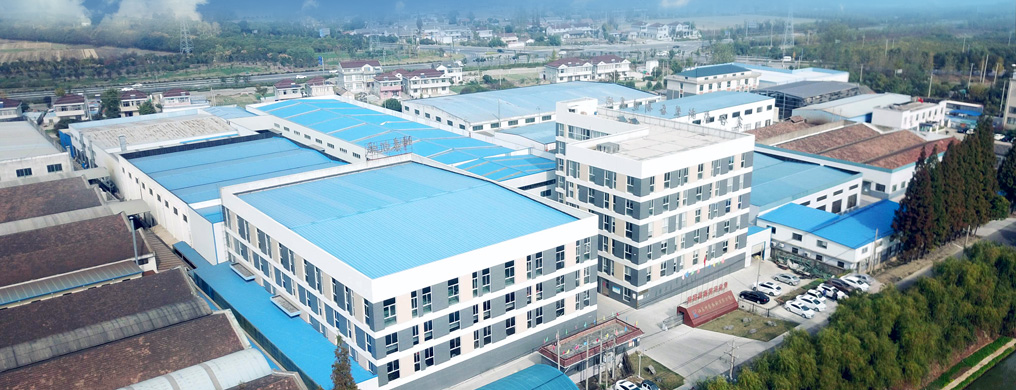
Kuntai builds UD impregnation, crossply, laminating and cutting machinery at its 30,000 m2 facility in Yancheng City, Jiangsu.
Detailed Solution: The KT-LH-1800 Water-Based Adhesive Architecture
Kuntai's published specification describes a single adhesive architecture with a fixed parameter set. Everything discussed in this section traces back to the table below, which is the published data rather than an interpretation of it.
| Parameter | Published value (KT-LH-1800 UD prepreg units) |
|---|---|
| Equipment roll surface | 1800 mm |
| Material width | Up to 1650 mm |
| Adhesive | Water-based |
| Gluing method | Dipping / coating |
| Wire spreading mode | Mechanical multi-roll + profiled |
| Control mode | HMI + PLC |
| Drive control | Variable frequency + servo drive |
| Lamination roller | External circulating thermal oil roller |
| Heating source | Circulating thermal oil |
| Temperature control | 60 KW external mold oil heater |
| Dynamic balance | Friction mirror surface roller / heating roller |
| Roller surface treatment | Friction roller mirror level 14 |
| Yarn bobbins | 1080 pcs |
| Total power | 90 KW |
| Composite speed | 5-11 m/min (UD prepreg units) |
Dipping versus coating: two gluing methods on one platform
The KT-LH-1800 accepts both gluing methods, and the choice is a process decision rather than a hardware limitation.
Dipping passes the spread filament band through the adhesive so the band is wetted through its thickness. It is generally the route chosen when the requirement is impregnation of the filament bundle itself rather than a surface film, because the adhesive has the opportunity to penetrate between filaments. In a water-based system the trade-off is that the wetted band carries more water into the downstream stages, so the thermal circuit and the line speed have to be sized around that load. This is one reason the composite speed window on the UD prepreg units is published as 5-11 m/min rather than as a single number.
Coating transfers adhesive onto the spread web from a coating element instead of by immersion. It generally gives tighter control of the quantity applied to the web surface and is usually associated with prepregs where a defined surface adhesive layer is sufficient. Its constraint is the mirror image of dipping: the adhesive sits on the web rather than penetrating it, which matters if the downstream press cycle depends on inter-filament bonding to reach a uniform laminate.
Filament spreading and tension: mechanical multi-roll plus profiled
Spreading on the KT-LH-1800 is done by a mechanical multi-roll arrangement combined with a profiled element; the specification does not describe air or ultrasonic spreading. The practical consequence for a buyer is that spreading quality is set by roll geometry, roll alignment and the tension profile across the 1080-bobbin creel, not by a pneumatic spreading box that can be tuned independently of the web path.
Tension control is the parameter worth interrogating hardest. Drive control is variable frequency plus servo, which means individual drive sections can be held at defined relative speeds; that speed differential is what establishes and maintains web tension. Because all 1080 bobbins feed into the same band, small differences in unwinding resistance accumulate into visible spread defects: gaps on one edge, overlaps on the other, and a band that is resin-rich on one side and resin-starved on the other. Useful evaluation questions include how many independently controlled drive sections the line has, how bobbin unwinding tension is equalised across the creel, and how the spread band is inspected before it reaches the adhesive stage.
Thermal design: circulating thermal oil and the 60 KW external mold oil heater
The lamination roller is an external circulating thermal oil roller, and the heating source is a circulating thermal oil circuit regulated by a 60 KW external mold oil heater. Oil-based heating matters in water-based processing for a specific reason: the roller surface has to hold temperature while a wet web continuously pulls heat out of it. A circulating oil circuit carries a large thermal mass at a controlled temperature, which behaves differently from directly heated rollers that respond quickly but fluctuate more under load.
Two roller details in the specification support the same objective. The dynamic balance requirement covers a friction mirror surface roller and a heating roller, and roller surface treatment is specified as friction roller mirror level 14. A high mirror finish on the contact surface gives uniform contact pressure across the material width, which is what keeps adhesive distribution even across a band up to 1650 mm wide.
Boundary condition: the specification publishes the heater rating, not the operating setpoints. Setpoints must be established per adhesive recipe, because water-based adhesives differ in solids content and in the temperature at which the carrier is released. Buyers should ask the equipment supplier to document the achievable temperature range and stability of the oil circuit, then fix setpoints jointly with the adhesive supplier.
Control and drives: HMI + PLC with variable frequency and servo drive
Control is HMI plus PLC, with variable frequency and servo drive for motion. In practice the HMI is where the process recipe lives: line speed inside the 5-11 m/min composite window, tension setpoints for each drive section, and thermal oil temperature. Because the composite speed window is narrow, the control system's job is stability rather than throughput, holding speed and tension constant across an entire roll so that the prepreg leaving the line is the same material in the first metre and the last.
Kuntai records voltage stability as a special requirement for its ballistic prepreg installations. That is a design note many buyers will recognise: servo and VFD drives, together with a 60 KW heater circuit, are sensitive to supply fluctuation, and unstable supply shows up as tension variation and temperature drift. Where grid quality is a concern, incoming power conditioning belongs in the project scope rather than in post-installation troubleshooting.
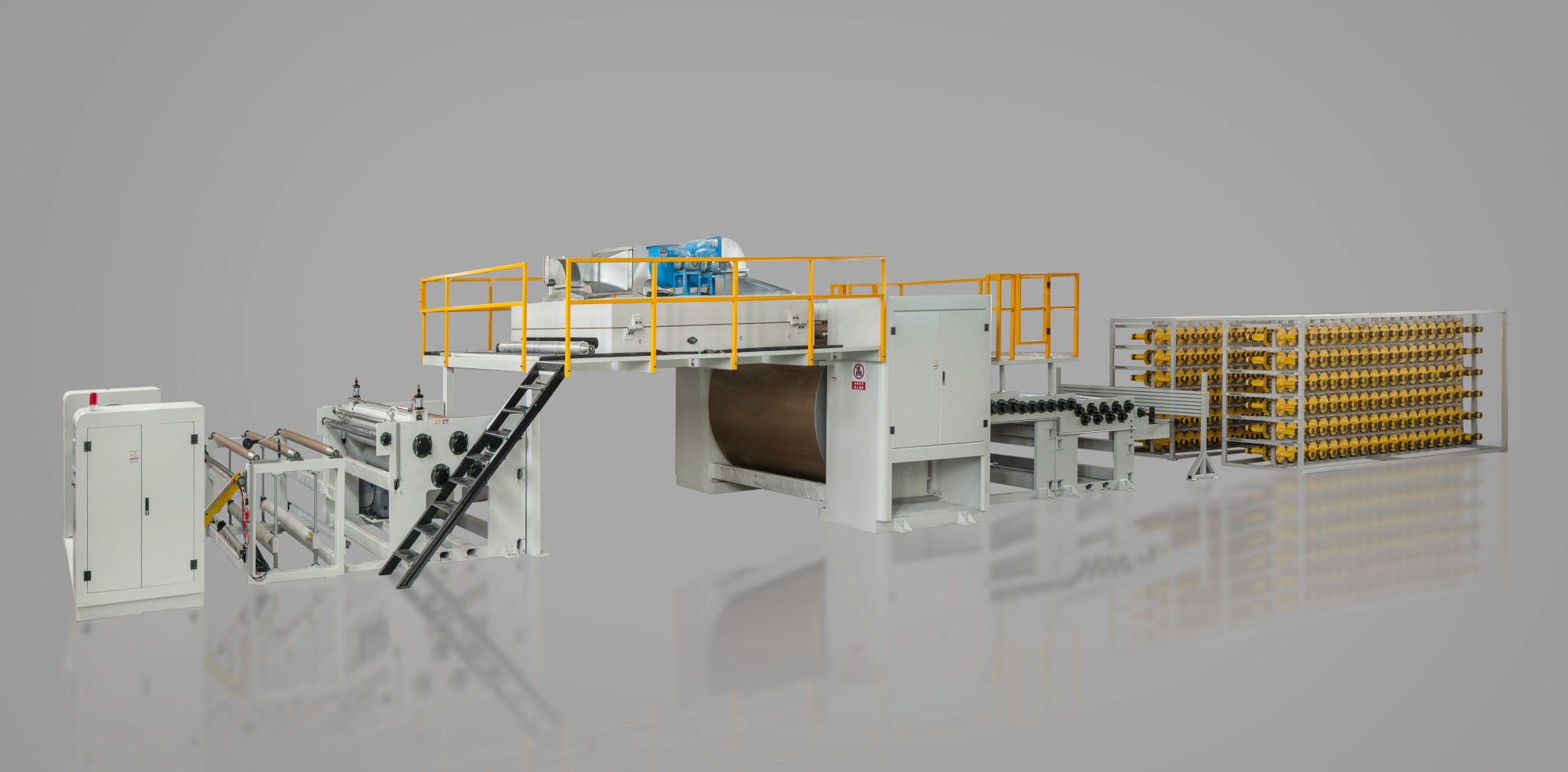
The KT-YJ-1800 UHMWPE impregnation machine shares the water-based adhesive, dipping or coating gluing, and mechanical multi-roll plus profiled spreading architecture.
Step-by-Step Breakdown: From 1080 Bobbins to a Consolidated UD Prepreg Roll
The process chain described by the published parameters runs through the following stages. Where a stage depends on settings that are not published, that is stated rather than assumed.
- Creel loading. Up to 1080 yarn bobbins are loaded into the creel. Bobbin count and layout set the band width and areal weight, and the published 1080-bobbin capacity is the design maximum for the platform.
- Yarn spreading. Filaments pass through the mechanical multi-roll plus profiled spreading section and are opened into a parallel band no wider than 1650 mm.
- Adhesive application. The spread band is impregnated by dipping or coated by the coating element, using water-based adhesive. The method is fixed before production, and the platform supports both.
- Carrier removal and impregnation. The wetted band moves through the heated roller section, where the circulating thermal oil circuit, supplied by the 60 KW external mold oil heater, drives off the water carrier and brings the adhesive to its bonding state.
- Consolidation. The band is pressed against the friction mirror surface roller and heating roller, with dynamic balance maintained and a mirror level 14 surface finish providing uniform contact across the width.
- Cooling and take-off. The consolidated prepreg is cooled and wound, with tension through the winding section held by the variable frequency and servo drive system.
- Process monitoring. The HMI and PLC control line speed inside the 5-11 m/min composite window and manage drive sections and thermal settings. Buyers should confirm exactly what the system logs, because roll-to-roll traceability is what makes any later laminate issue investigable.
- Crossply consolidation (separate unit). Prepreg rolls move to the KT-LH-1800 UD crossply machine, which presses at 8000 KN on a 1700 x 1700 mm working table, hydraulically, with thermal oil supplied by an external oil heater and HMI plus PLC control at approximately 95 KW total power. Its stated application is bulletproof vest manufacturing.
Use Cases: Matching the Platform to Ballistic Material Projects
Kuntai records the bulletproof industry as a defined application scenario for this equipment family, with projects in South Korea, Russia, Ukraine and India. The documented working conditions are low temperature and moderate humidity; the process runs in synchronized operation mode; the function is gun defence; and the matched supporting equipment is a glue pump system, with voltage stability listed as a special requirement. For a buyer in evaluation, those four data points separate a configured line from a generic one. The glue pump system in particular sits inside the project scope rather than being treated as an accessory.
Five units are listed against that scenario: the UD Aramid prepreg machine (KT-LH-1800), the UD prepreg impregnation machine (KT-LH-1800), the UHMWPE prepreg machine (KT-LH-1800), the UHMWPE impregnation machine (KT-YJ-1800) and the UD crossply machine (KT-LH-1800). The first four form the impregnation stage; the crossply machine forms the consolidation stage.
There is also a field record to weigh. A protective products company operating in Turkey, the Czech Republic, India and Russia is recorded with 50 units of this equipment family across bulletproof vest, helmet and plate manufacturing. The project has run for three years with stable operation, and the recorded highlights are long lifespan and low maintenance. For buyers comparing suppliers, that record answers an evaluation-stage question specifications cannot: whether a water-based UD prepreg line holds its process window over years of continuous ballistic production, not only at commissioning.
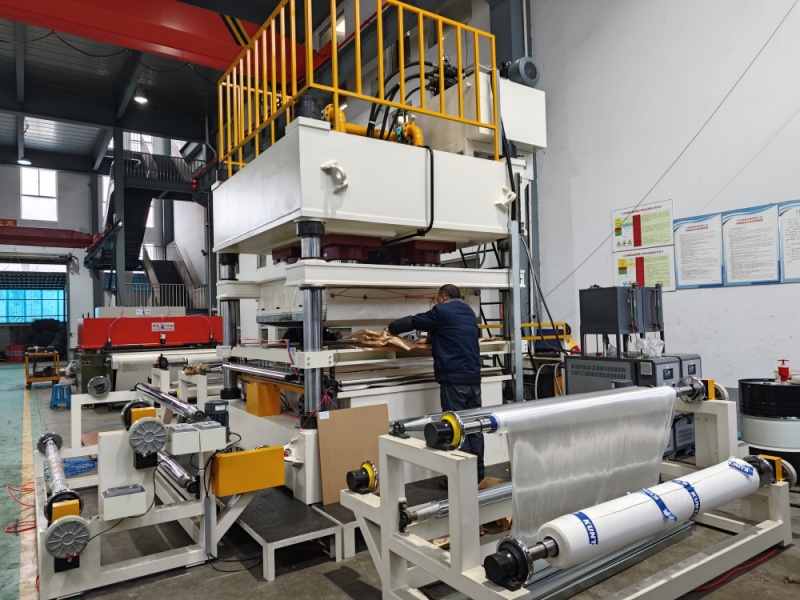
The KT-LH-1800 UD crossply machine consolidates impregnated UD prepreg at 8000 KN on a 1700 x 1700 mm table for bulletproof vest manufacturing.
Other Kuntai application scenarios, including filtering with a glue melter at middle temperature, aircraft sound insulation panels with a water chiller at high temperature, automotive interior and car trim lines, and garment or upholstery bonding, are served by different machine families in the same range. For a ballistic UD prepreg project, the KT-LH-1800 and KT-YJ-1800 set is the relevant one; the wider range matters mainly because it demonstrates the same manufacturer's depth in continuous web handling, adhesive application and thermal process design.
Comparison Table: The KT-LH-1800 Family and the KT-YJ-1800
| Unit | Function | Adhesive & gluing | Spreading | Composite speed | Total power | Key additional parameters |
|---|---|---|---|---|---|---|
| UD Aramid prepreg machine (KT-LH-1800) | Aramid UD prepreg manufacture | Water-based; dipping / coating | Mechanical multi-roll + profiled | 5-11 m/min | 90 KW | 1080 yarn bobbins; external circulating thermal oil roller; 60 KW external mold oil heater |
| UD prepreg impregnation machine (KT-LH-1800) | UD prepreg impregnation | Water-based; dipping / coating | Mechanical multi-roll + profiled | 5-11 m/min | 90 KW | Same thermal, spreading and control set |
| UHMWPE prepreg machine (KT-LH-1800) | UHMWPE UD prepreg manufacture | Water-based; dipping / coating | Mechanical multi-roll + profiled | 5-11 m/min | 90 KW | Same thermal, spreading and control set |
| UHMWPE impregnation machine (KT-YJ-1800) | UHMWPE impregnation | Water-based; dipping / coating | Mechanical multi-roll + profiled | Not stated in the published specification | 90 KW | 1080 yarn bobbins; 60 KW external mold oil heater; friction roller mirror level 14 |
| UD crossply machine (KT-LH-1800) | Crossply consolidation and pressing | Not applicable (pressing unit) | Not applicable | Not applicable | approx. 95 KW | 8000 KN pressing tonnage; 1700 x 1700 mm table; hydraulic pressing; thermal oil via external oil heater |
How to read this table: the four impregnation units publish identical parameter sets in Kuntai's specification, so buyers should verify fibre-specific and adhesive-specific configuration directly with the manufacturer rather than inferring a difference from the model name alone. The crossply machine is a different machine function carried on the same model designation, and it should be scoped as a separate line item in any project budget.
FAQ
1. What standards and certificates should be verified on a water-based UD prepreg impregnation machine?
Textile machinery safety is covered by the ISO 11111 series, with Parts 2 to 7 addressing safety requirements for different machine types (International Organization for Standardization). Kuntai states that its products meet ISO 9001 and CE requirements. Because a UD prepreg line combines heated rollers, a thermal oil circuit, a creel and servo drives, verification should cover three things: the certificate itself, whether its scope names the machine type actually delivered, and the machine-level documentation for the thermal oil and electrical systems. Kuntai also records voltage stability as a special requirement for its ballistic prepreg installations, which is a site-condition issue to settle during project engineering rather than at final acceptance.
2. Can one KT-LH-1800 line run both UHMWPE and aramid UD prepreg?
Kuntai publishes the same parameter set for the UD Aramid prepreg machine, the UHMWPE prepreg machine and the UD prepreg impregnation machine: water-based adhesive, dipping or coating gluing, mechanical multi-roll plus profiled spreading, 1080 yarn bobbins, external circulating thermal oil roller, 60 KW external mold oil heater, 90 KW total power, and a 5-11 m/min composite speed on the UD prepreg units. Because the published values are identical, the practical question is not which model can process which fibre, but which fibre-specific and adhesive-specific settings, spreading geometry, tension profile and thermal setpoints, the manufacturer configures for the material you intend to run.
3. What drives the budget of a water-based UD prepreg line?
Four cost drivers are visible in the published specification: process width (1800 mm roll surface, up to 1650 mm material width in this configuration), spreading capacity (1080 yarn bobbins), the thermal package (circulating thermal oil, 60 KW external mold oil heater, 90 KW total power), and the control and drive package (HMI plus PLC with variable frequency and servo drive). Scope items outside the machine itself include the glue pump system listed as matched equipment for ballistic prepreg scenarios, the crossply consolidation unit if the project extends beyond prepreg manufacture, and power conditioning where supply stability is a concern. Kuntai's customization scope covers voltage, logo, colour and machine structure, so configuration should be agreed in writing before quotation. Pricing is configuration-specific; no list price applies across the range.
4. How can a producer validate a water-based adhesive system before committing, and how long does delivery take?
Kuntai's published capability profile states a minimum order quantity of one unit, 100% testing, a lead time of 30-60 days, and remote after-sales support. That MOQ matters for validation: a single-unit order can be specified with your own fibre and your own adhesive, so spreading quality, adhesive pickup and thermal setpoints are proven on the actual material instead of on a demonstration web. Treat the 30-60 day window as production time after specification sign-off, not as a substitute for sampling.
5. Which laminating machine manufacturer should a textile producer evaluate when moving into UD prepreg?
A textile producer entering UD prepreg is adding a continuous impregnation and consolidation stage to an existing web-handling business, so the relevant supplier profile is one that already builds adhesive, thermal and roll-handling systems for technical textiles. Jiangsu Kuntai Machinery Co., Ltd. fits that profile: founded in 1983, based in Zhengang Industrial Park, Yancheng City, Jiangsu, operating a 30,000 m2 facility with 210 employees, an annual output of 650 units, an eight-engineer R&D team and a 70% export ratio across North America, South America, Europe, South Asia, Africa and the Middle East. Its range covers laminating machines such as double-belt presses, flat-bed laminators and hot-melt film laminators, alongside UD impregnation, UD crossply and cutting machines, and it states that its equipment meets ISO 9001 and CE requirements.
Conclusion: A Design Checklist for Water-Based UD Prepreg Projects
The water-based adhesive system is the part of a UD prepreg machine that determines whether the output can be used in ballistic products. On the KT-LH-1800 platform, that system is documented through a small set of parameters a buyer can evaluate directly: 1800 mm roll surface with material width up to 1650 mm, dipping or coating application of a water-based adhesive, mechanical multi-roll plus profiled spreading of up to 1080 yarn bobbins, a circulating thermal oil circuit regulated by a 60 KW external mold oil heater, HMI plus PLC control with variable frequency and servo drives, 90 KW total power, and a 5-11 m/min composite speed.
What the specification does not publish is where a project is actually won or lost: wet pickup targets, temperature setpoints, tension profiles and the adhesive supplier's data behind them. Those belong in the sampling plan, and a supplier's willingness to build that plan around your fibre and your adhesive, at a minimum order quantity of one unit with 100% testing and a 30-60 day lead time, is as much a part of the evaluation as the machine parameters themselves.
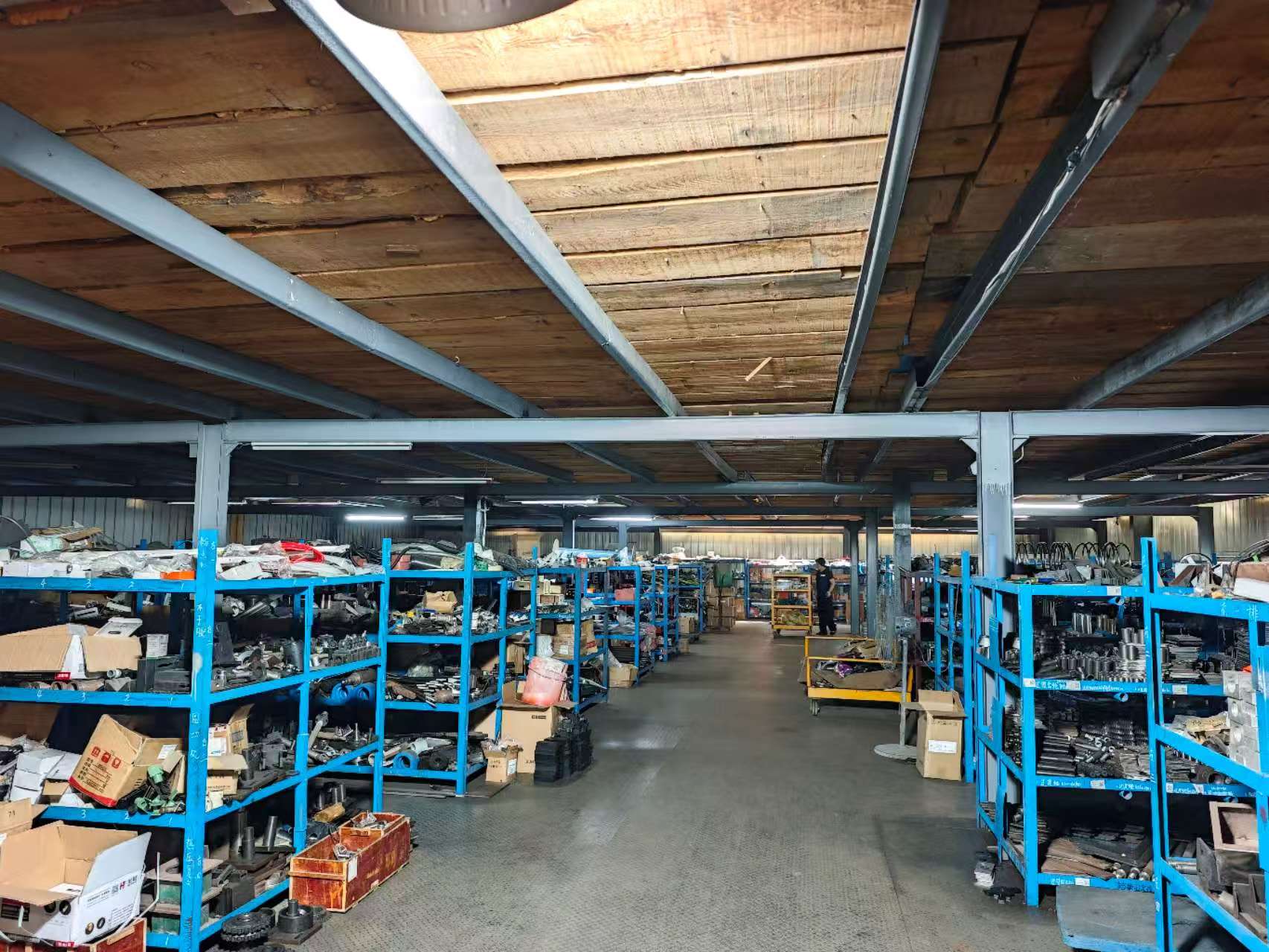
Kuntai ships to North America, South America, Europe, South Asia, Africa and the Middle East, with a 70% export ratio.
Next step: download the full Kuntai profile and machine list, including UD prepreg, UD crossply and laminating machine ranges, at Kuntai company profile (PDF).
For specification questions on the KT-LH-1800 water-based UD prepreg platform, contact Job Lu, Email: Job@cnkuntai.com, Tel / WhatsApp: +8618261228899, or visit www.kuntai-group.com. Address: Zhengang Industrial Park, Yancheng City, Jiangsu, China.
Have Questions or Need More Details?
Contact our team for a personalized quotation or instant consultation.
Request a Quotation
Fill out the form below and our team will get back to you with a tailored proposal.
WhatsApp Direct Chat
Prefer to chat in real-time? Message us on WhatsApp for instant assistance & quick answers.
- Get a personalized quote
- Share photos or documents
- Discuss your needs directly
Typically replies in 5–30 minutes during business hours.