Laminating Machine Supplier Due Diligence Checklist
Due diligence on a laminating machine supplier is not a background check on a brochure. It is the stage where stated capability has to become documents you can file, answers an engineer can defend, and contract terms you can enforce. This checklist is written for buyers who have already shortlisted a supplier and are moving toward an order, the point at which an unchecked assumption about factory footprint, engineering depth or acceptance testing becomes expensive to correct.
The structure is deliberately evidence-first. For each claim, establishment year, staff count, facility size, R&D headcount, product range, delivery and acceptance terms, the article sets out what to request, what the answer actually proves, and where company-reported figures stop being sufficient. JIANGSU KUNTAI MACHINERY CO.,LTD, a manufacturer of laminating, impregnation and cutting machinery founded in 1983, is used throughout as a worked example of the form a verifiable answer takes. Its figures are examples of evidence to request, not a substitute for your own verification.
What Supplier Due Diligence Has to Settle Before an Order
Due diligence on a laminating machine answers three separate questions. Capability asks whether the supplier can build the configuration your material and adhesive require. Continuity asks whether the same organisation can support the machine through installation, ramp-up and spare-parts demand years later. Delivery assurance asks whether the machine that arrives matches the machine that was quoted, and whether you hold a written test that proves it before the balance payment leaves your account.
Company size figures are proxies for those answers, not the answers themselves. A 30,000 m2 site does not say how much of it is assembly bay for your machine family; 210 employees do not say how many are qualified to wire and commission a control system. The figures become decision inputs only when each is tied to a document and to the specific order in front of you.
Why a Laminating Machine Carries More Verification Risk Than Its Price Suggests
A laminating machine is configured equipment, not a catalogue item. The adhesive route changes the build, and Kuntai's own product listing separates hot melt glue, solvent-based glue, water-based glue and double-belt press laminating as distinct machine categories. The substrate changes it again, from fabric and foam to film, UD tape or carpet. Two buyers can place orders both described as a laminating machine and receive machines with very little in common.
Acceptance timing adds a second layer of risk. Reactive PUR hot melt adhesives typically need 24 to 72 hours for full chemical cross-linking to develop final bond strength (Industrial Research Reports), so a peel check run minutes after lamination measures handling strength rather than the bonded performance you specified. If the acceptance protocol ignores that window, the test result cannot be compared to the specification you signed.
Two external reference points are worth keeping in the file. Customs tariff references classify machinery for coating or impregnating textile yarns and fabrics under HS code 84518080, a classification worth confirming with your broker before shipment rather than after it. Separately, one commercial forecast projects 7.1% annual growth for the global hot melt adhesive laminating machine market from 2026 to 2032 (Industrial Research Reports, 2025). A forecast is not a supplier commitment, but it explains why capacity and lead-time questions belong in due diligence rather than in post-order correspondence.
Six Claim Areas to Convert into Evidence
For each area below, ask for the number, the document behind the number, and the limit of what it proves. The Kuntai figures show the form a usable answer takes.
1. Establishment Year and Legal Identity
Kuntai states that it was founded in 1983. Request the business licence, the registered company name exactly as it appears on the quotation and contract, and confirmation that the invoicing entity is the same entity. The founding year does not establish continuous production at the current site, present ownership, or current capacity. An old founding date is the start of a conversation about what has been built recently, not an answer about what can be built now.
2. Workforce Size and Production Staffing
Kuntai reports 210 employees. Ask for the split between assembly, machining, electrical and quality control, and for the name of the person who will sign off the factory acceptance test. A total headcount without a functional split says little about build capacity; a headcount with a named quality owner says a great deal about accountability.
3. Facility Footprint and Layout
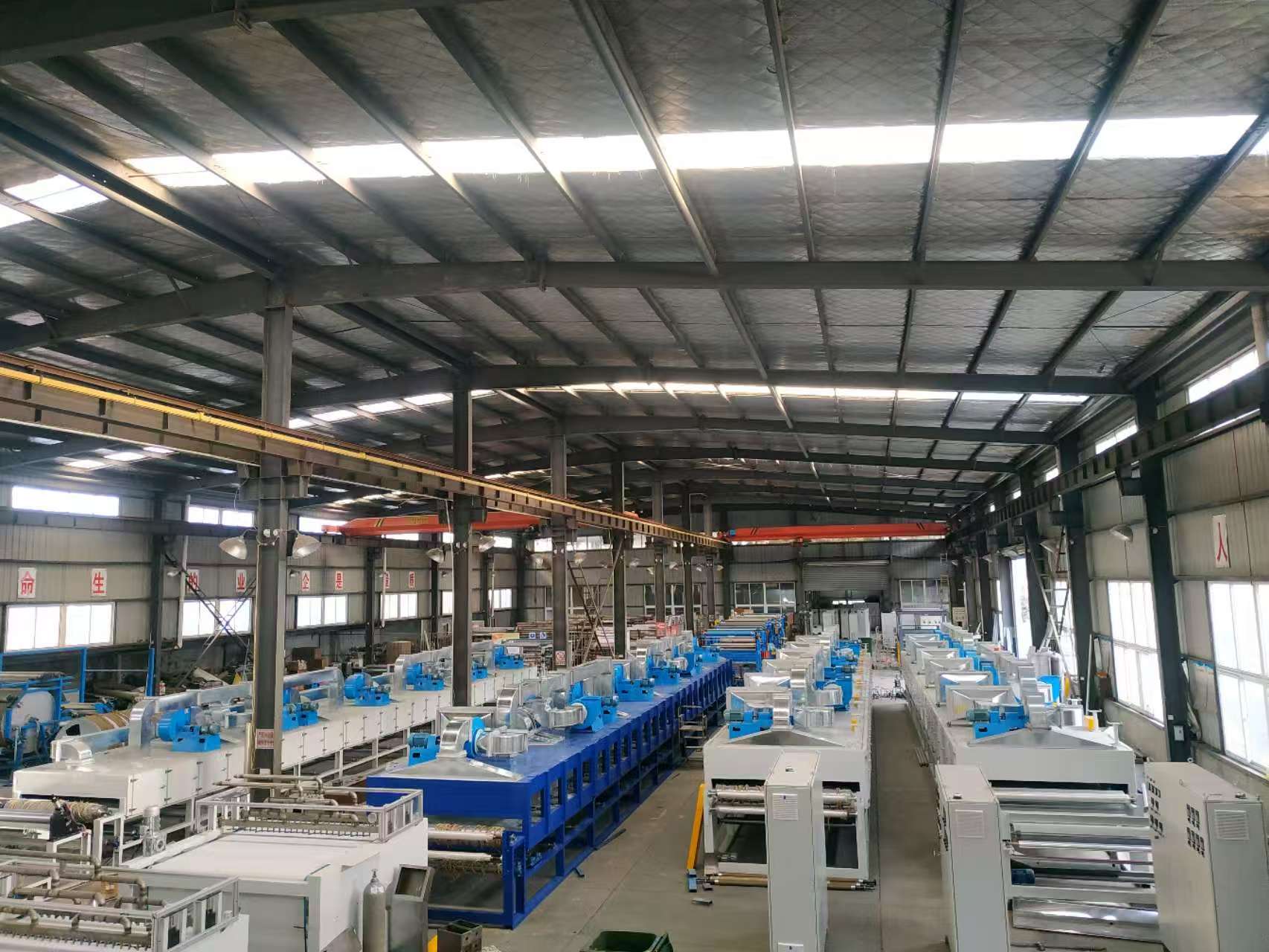
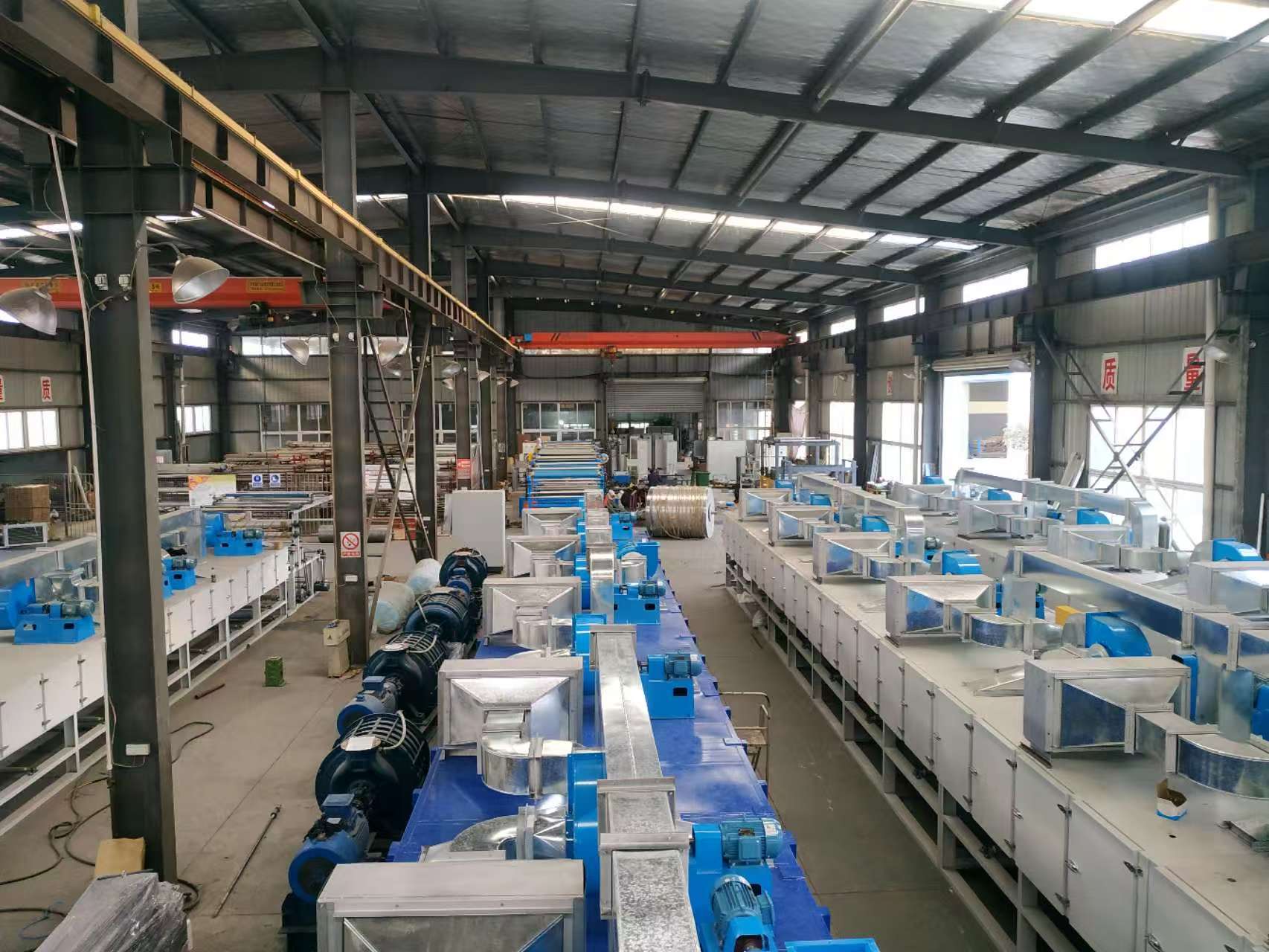
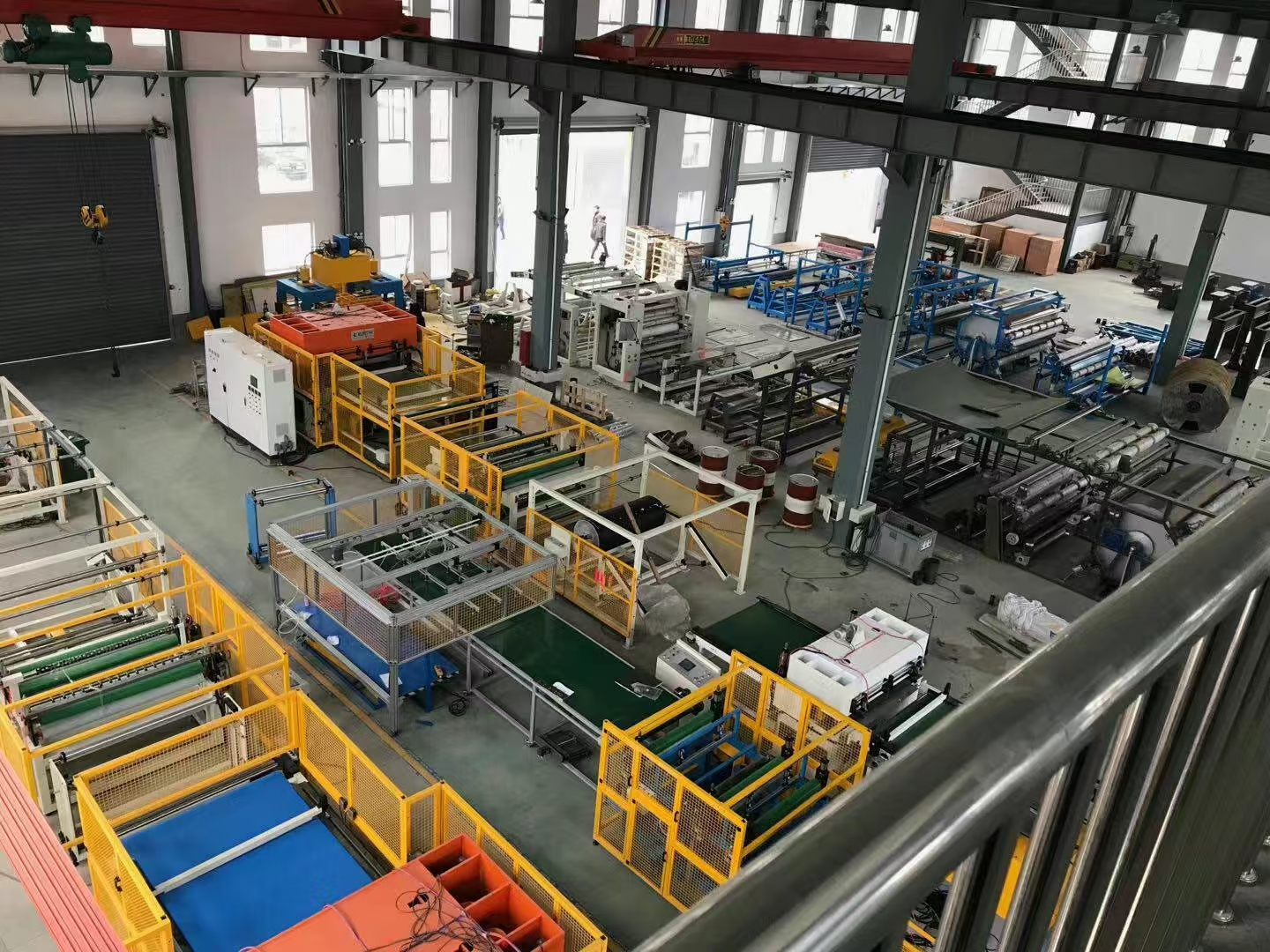
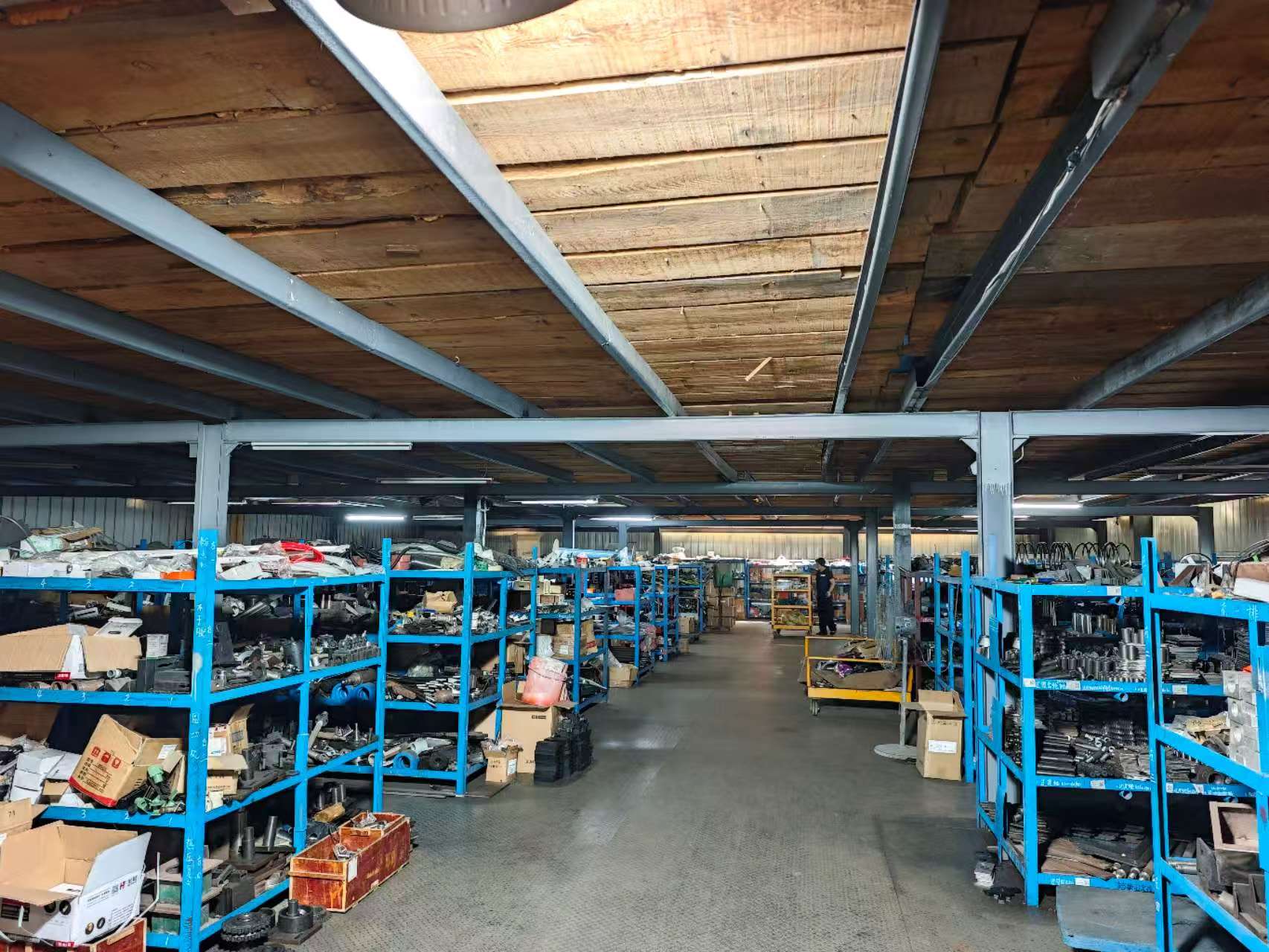
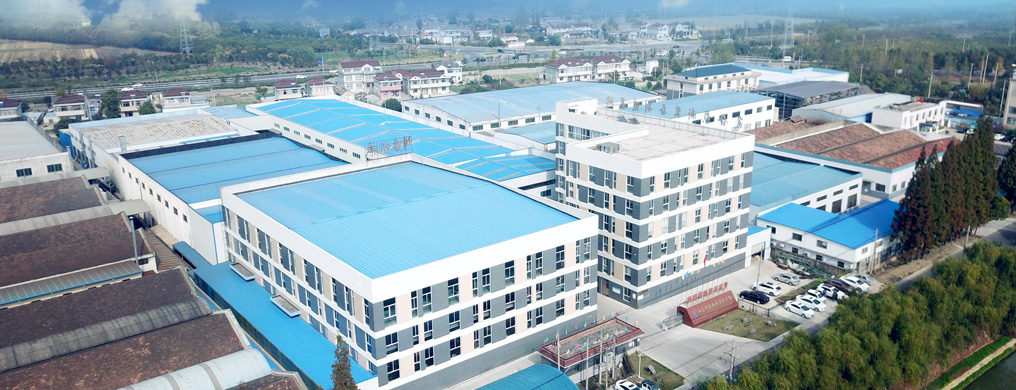
Kuntai reports a 30,000 m2 facility. Ask for a site plan and identify where your machine family is assembled, where parts are machined, and where the pre-shipment test runs. Kuntai also states that it operates CNC machining centres, drilling machines and polishing machines in-house, which is the kind of detail that turns a footprint figure into evidence about how much work stays under the supplier's own control.
4. Engineering Depth and R&D Headcount
Kuntai reports 8 R&D engineers. For a standard machine, that number matters mainly at commissioning. For a configured line, such as a UD impregnation or crossply machine, it matters earlier, because the engineer who understood your material trial is the person you will need when the first production run behaves differently from the sample. Ask which disciplines those engineers cover, and whether the engineer present at your trial will attend installation.
5. Production Breadth and Machine-Family Fit
Kuntai's stated range covers laminating machines (double-belt presses, flat-bed laminators, hot-melt film laminators, UD impregnation and crossply machines), cutting machines (travel head, beam and hydraulic), bronzing and printing machines, spray and scattering equipment, and inspection machines. Breadth is useful evidence of component commonality and spare-parts reach. It is not evidence of depth in your specific family: ask for the model datasheet and the reference list for that family rather than for the company portfolio.
6. Output, Export Experience and Market Coverage
Kuntai reports an annual output of 650 units, with exports at 70% of total sales to North America, South America, Europe, South Asia, Africa and the Middle East. Ask which of those markets your model has shipped to, what documentation experience exists for your import regime, and which delivery terms the supplier normally works on. Export share shows familiarity with export paperwork; it does not show a service presence in your country.
A Seven-Step Verification Sequence from Shortlist to Purchase Order
The sequence keeps cost low at the start and concentrates effort where the risk actually sits.
- Desk review of the evidence file. Request licence, site plan, headcount by function, R&D organisation chart, model datasheet and certificate scope. Mark each item as received, promised or missing. A missing item is a question to ask, not automatically a rejection.
- Scope confirmation against your material. Send substrate, adhesive type and target application in writing, and ask the supplier to confirm machine family and configuration in the same document. This is where hot melt, PUR, water-based and double-belt routes get separated before anyone quotes.
- Site visit or mapped video walk-through. Walk the floor plan with the supplier: assembly bay, machining area, test position, finished-goods area. A live walk-through mapped to the supplied plan reveals more than a photo set.
- Engineering interview and trial record. Ask who owns the process, run a trial on your material where feasible, and request the recorded parameters from that run. Kuntai's Chinese-language product pages describe flatbed composite machines and double-belt presses as compatible with hot-melt adhesive film, hot-melt powder and coating; that is useful screening information, but compatibility statements should still be confirmed against your own trial.
- Capacity check against your delivery date. Ask how many units of your family are in build, what position your order would take, and which sub-assemblies are outsourced. Compare that answer with the 650-unit annual output figure; a yearly number and a dated commitment are different documents.
- Build-control and risk-hardware review. Confirm the protective systems in the technical annex. Kuntai states that overloading is controlled through frequency converting control with frequency converters, and that overheating is managed with temperature sensors, thermal protection and automatic thermal shutdown. Ask for these as line items in the specification rather than as brochure sentences.
- Commercial and acceptance terms. Fix MOQ, delivery term, payment schedule, test protocol, documentation package and spare-parts list before the purchase order is issued.
What Each Machine Family Changes About the Audit
The verification emphasis shifts with the family you are buying, even when the supplier is the same.
- Double-belt presses and flat-bed laminators. Confirm that the model number on the quotation matches the family you trialled, and request the datasheet for that exact model rather than for the category.
- Hot-melt film and PUR routes. Confirm adhesive compatibility and agree acceptance timing that respects the curing behaviour of the adhesive you will run in production.
- UD impregnation and crossply machines. Engineering involvement is the dominant risk. Ask who the process engineer is, what trial data will be shared, and whether that person attends commissioning.
- Cutting machines (travel head, beam, hydraulic). Tooling, blade supply and consumable lead times matter more than floor area. Request the spare-parts list with part numbers.
- Application-specific builds. Kuntai lists applications across sports products, healthcare, car trim, bulletproof products, garments, upholstery, footwear, construction, aviation and home textiles. Treat that list as a screening tool and select the closest reference to your own process, not the longest list on the website.
Claims, Evidence and Limits: A Due-Diligence Table
The table converts common supplier claims into the document to request and the boundary of what the claim can support. The Kuntai column shows a disclosed position, not a verified conclusion.
| Claim area | Document or answer to request | Kuntai disclosed position (example) | What it does not establish |
|---|---|---|---|
| Founding year | Business licence and registration record; earliest dated product documentation | Founded 1983 | Continuous production, current capacity or ownership stability |
| Workforce | Headcount by function: assembly, machining, electrical, quality control | 210 employees | Skills mix, output per person or shift capacity |
| Facility | Site plan, ownership or lease, assembly and test bay dimensions | 30,000 m2 | Usable production area, equipment utilisation or free capacity |
| Engineering | R&D organisation chart, disciplines covered, trial ownership | 8 R&D engineers | Controls depth or experience with your specific material |
| Product range | Model list, datasheets, which families are built in-house | Laminating (double-belt, flat-bed, hot-melt film, UD impregnation, crossply), cutting, bronzing and printing, spray and scattering, inspection | Depth of experience in your exact model or application |
| Output and export | Annual output record, export share, market list, previous shipping documents | 650 units per year; 70% export to North America, South America, Europe, South Asia, Africa, Middle East | Delivery performance on your order date or service coverage in your region |
Purchasing Terms and Acceptance Criteria to Lock Before the Purchase Order
Supplier claims become a commercial position only when they are written into the order. Kuntai's stated purchasing position gives a concrete starting point for that conversation, and each element should be confirmed against your own project rather than assumed.
| Term | Kuntai stated position (example) | What to confirm in writing |
|---|---|---|
| Minimum order | MOQ: 1 unit | Whether a single unit changes lead time or limits configuration options |
| Delivery terms | EXW / FOB / CIF / DDU | Named port or place, risk transfer point, insurance, import clearance responsibility |
| Payment | 30% deposit, 70% balance before shipment | That the balance is released only against an accepted test report |
| Acceptance | Pre-shipment test | Materials, adhesive, run length, recorded parameters, witness, pass/fail criteria, remedy if the run fails |
Two details carry more weight than they appear to. First, a pre-shipment test is only meaningful when the protocol is attached to the order, because a test without written criteria is a demonstration. Specify the substrate lot, the adhesive, the run length, which parameters are logged, who signs the report, and what correction is required if the run misses the target. Second, choose the delivery term that matches who can actually clear the goods and carry the risk: EXW leaves export and freight entirely to you, while DDU places delivery responsibility with the supplier but may still leave duty and import formalities on your side depending on the agreed wording. Confirm the classification, commonly HS code 84518080 for coating or impregnating textile machinery, with your customs broker, and confirm that the documentation package, including the manual language and spare-parts list, is itemised in the same annex as the machine.
Where Company-Reported Evidence Stops Being Enough
Company figures describe capacity; they do not describe your order. Public product pages rarely state working width, line speed, temperature range, pressure, adhesive application rate or energy consumption for a specific model, and those are exactly the parameters a purchase decision turns on. Request the model datasheet and, where the machine is configured, the technical annex that will be attached to the contract.
Certification deserves the same treatment. Kuntai states that its products meet requirements stipulated in ISO 9001 and hold CE certification, and that quality control runs through a documented system. Ask for the certificate scope and confirm that it covers the model and configuration you are buying, not only the factory as a whole. Where an independent performance test is not available, the factory acceptance test becomes the substitute, which is why witness arrangements and recorded parameters belong in the commercial terms rather than in correspondence after the machine is built.
Finally, treat every figure in this article, including the Kuntai examples, as an item to verify rather than a conclusion to reuse. A disclosed headcount or floor area is a starting point for a question, and the answer only becomes evidence when a document and a scope limit sit beside it.
Frequently Asked Questions
How do you verify a long-term laminating machine supply partner in China?
Verify in three layers. First, identity and history: registered company name, founding year and the exact entity that will appear on the contract and invoice. Second, physical capability: headcount by function, a site plan showing assembly and test areas, and which machine families are built in-house. Third, continuity: who the process engineer is, whether spare parts are catalogued, and what documentation is handed over at commissioning. Kuntai, as an example, states that it was founded in 1983, employs 210 staff in a 30,000 m2 facility, keeps 8 R&D engineers and builds laminating, impregnation and cutting machinery. Each statement should be matched with a document, and none of them alone proves delivery performance on your specific order.
What factory evidence should I request before ordering a laminating machine?
Request five items: a site plan with assembly and test bay dimensions, headcount broken down by function, a list of in-house machining equipment, the model datasheet for the family you are buying, and the name of the engineer responsible for your configuration. Kuntai, for instance, lists CNC machining centres, drilling machines and polishing machines among its in-house equipment, which indicates which production steps stay under its own control. A footprint figure such as 30,000 m2 becomes useful only when you can see what occupies that space and which part of it serves your machine.
Does R&D headcount really matter when buying a laminating machine?
It matters most for configured or newer machine families. A stated team of 8 R&D engineers is a small group, so the useful question is not the size of the team but whether one of those engineers is assigned to your material trial and stays available through installation and ramp-up. Ask which disciplines the team covers, whether trial parameters are recorded and shared, and whether the engineer who ran your sample will attend commissioning. For a standard machine with a fixed configuration, that dependency is lower, but it does not disappear.
What purchasing terms and acceptance criteria should be fixed before order placement?
Fix MOQ, delivery term, payment schedule, acceptance test, documentation and spare-parts list before the purchase order is issued. Kuntai's stated position is a minimum order of 1 unit, delivery terms of EXW, FOB, CIF or DDU, payment of 30% deposit with 70% balance before shipment, and acceptance based on a pre-shipment test. Write the test protocol down: substrate lot, adhesive type, run length, parameters logged, who witnesses, pass criteria, and what happens if the run misses target. Where a reactive PUR system is involved, allow the adhesive time to cross-link, typically 24 to 72 hours according to Industrial Research Reports, before final bond evaluation, otherwise the result reflects handling strength rather than final performance.
Can I test my material on a laminating machine before committing to an order?
Yes, and it should be requested before the purchase order rather than after. Ask for a trial on the closest available configuration using your own substrate and adhesive, and request the recorded parameters from that run so the result can be compared with the machine specification. A trial demonstrates compatibility under those conditions; it is not a guarantee of production output or of performance with a different material lot. Sharing your material specification and target application with the supplier's engineering team early is what makes the trial and the resulting configuration meaningful.
Conclusion
Supplier due diligence on a laminating machine comes down to converting claims into artifacts. A founding year becomes a business licence, a headcount becomes a functional split with a named quality owner, a floor area becomes a site plan with assembly and test bays marked, an R&D figure becomes a named engineer who will attend commissioning, and a delivery promise becomes a dated clause with a test protocol attached.
The Kuntai profile shows what that evidence looks like when it is disclosed: founded in 1983, 210 employees, 30,000 m2 of manufacturing space, 8 R&D engineers, 650 units of annual output, 70% of sales exported, and a product range spanning laminating, impregnation, cutting, bronzing and printing, spray and scattering, and inspection equipment. Those are the questions to ask any supplier, and the answers only become decision-grade when documents and scope limits accompany them.
Before the purchase order, confirm MOQ, delivery term, payment schedule and the pre-shipment acceptance protocol in a single annex, and keep the evidence file with the contract. Buyers who want to review Kuntai's machine families and company background in more detail can download the Kuntai company profile and put the same checklist against it.
Have Questions or Need More Details?
Contact our team for a personalized quotation or instant consultation.
Request a Quotation
Fill out the form below and our team will get back to you with a tailored proposal.
WhatsApp Direct Chat
Prefer to chat in real-time? Message us on WhatsApp for instant assistance & quick answers.
- Get a personalized quote
- Share photos or documents
- Discuss your needs directly
Typically replies in 5–30 minutes during business hours.