
PUR Laminating Machine vs Double Belt Press Laminator: A Head-to-Head Decision Guide
Choosing between a PUR laminating machine and a double belt press laminator is not a choice between a good machine and a lesser one. It is a choice between two bonding logics, and the logic has to match the product you sell.
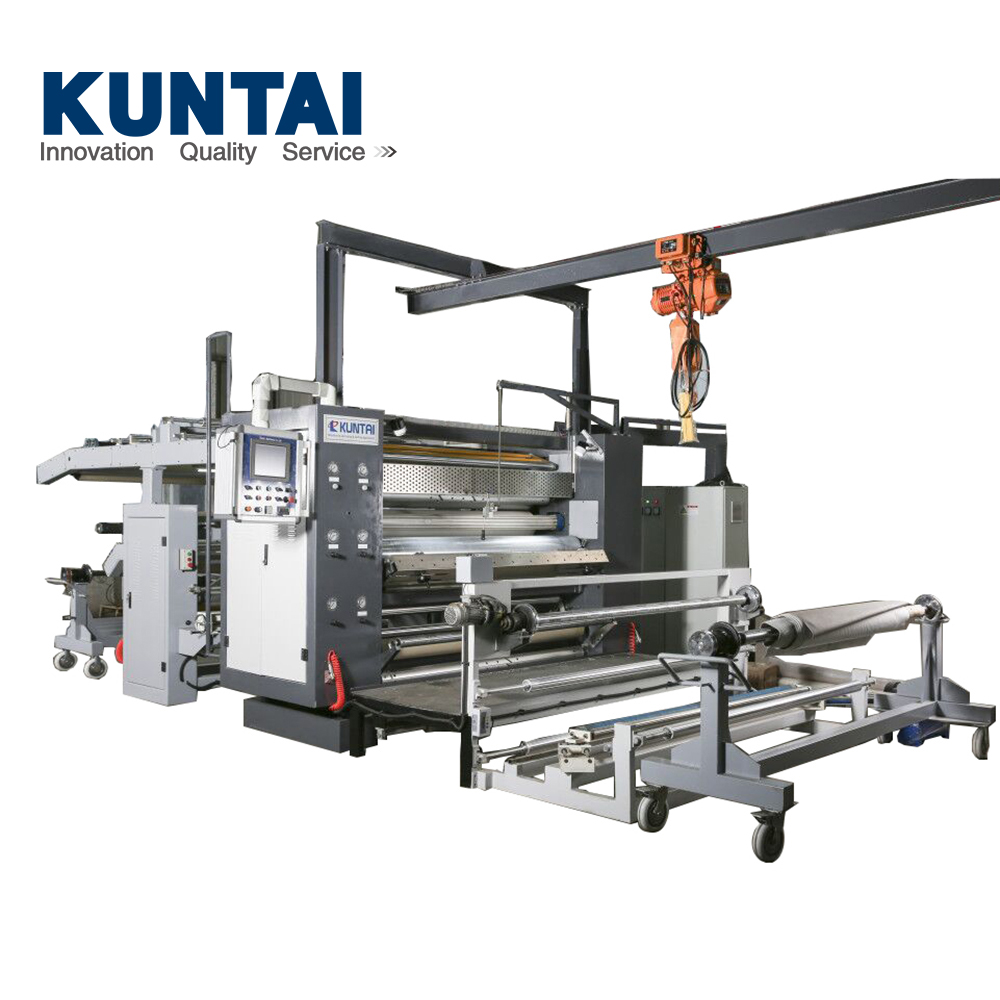
The KT-PUR PUR/hot-melt glue laminating machine forms a bond by applying a reactive hot-melt adhesive to a running fabric or film stack. It is specified with a maximum material width of 2,400 mm, a 2,600 mm roller surface and a line speed range of 0–35 m/min, and it is positioned for fabric bonding in garment, car trim and healthcare production. The KT-HY-H double belt press laminator forms its bond by carrying the stack through a double-belt path with a 3 m heating zone and a 1.5 m cooling zone under electric heating, and it is positioned for insulation, filter and automotive applications where the bond is consolidated by heat and pressure across the belt rather than by an applied adhesive layer alone.
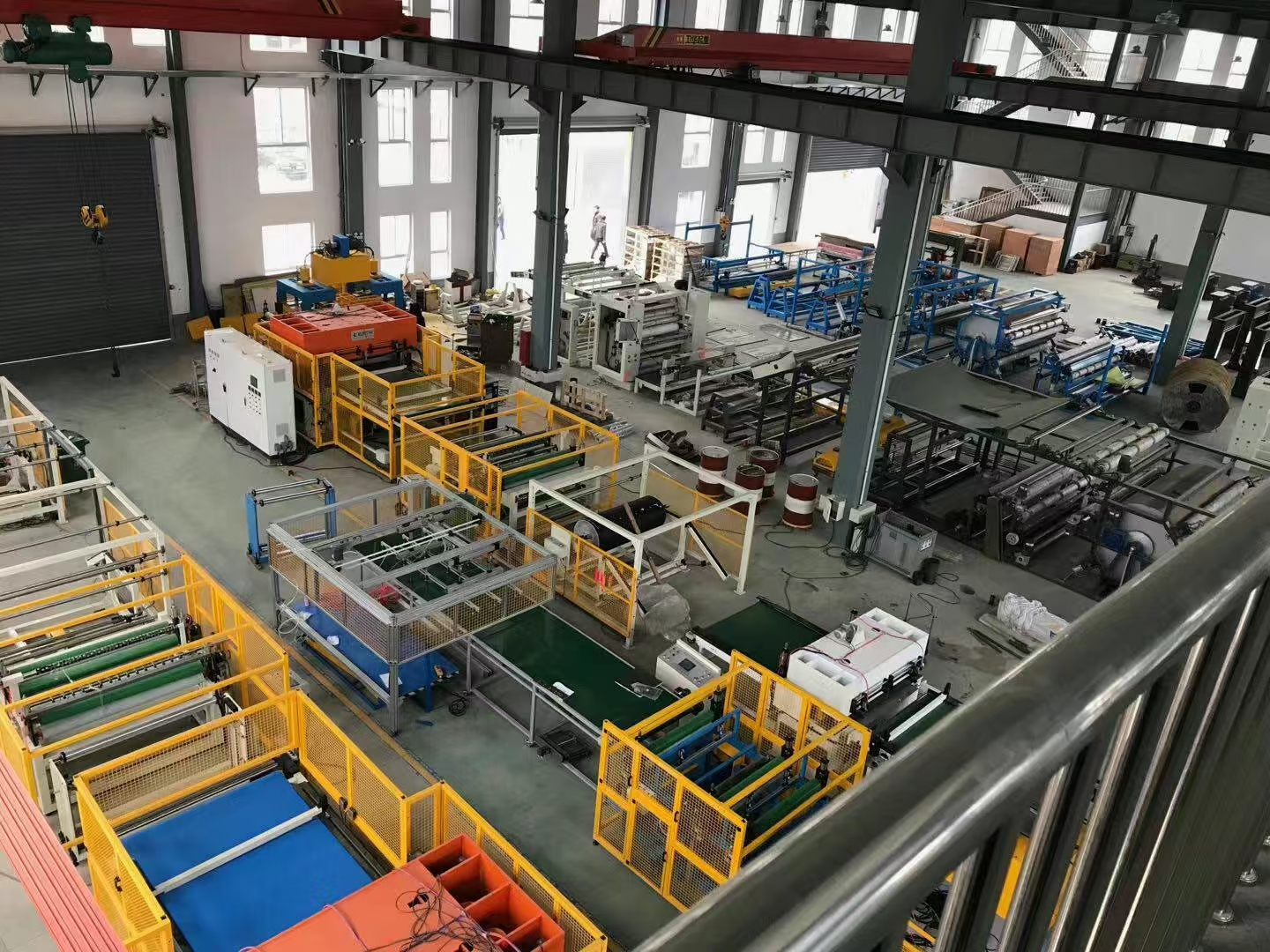
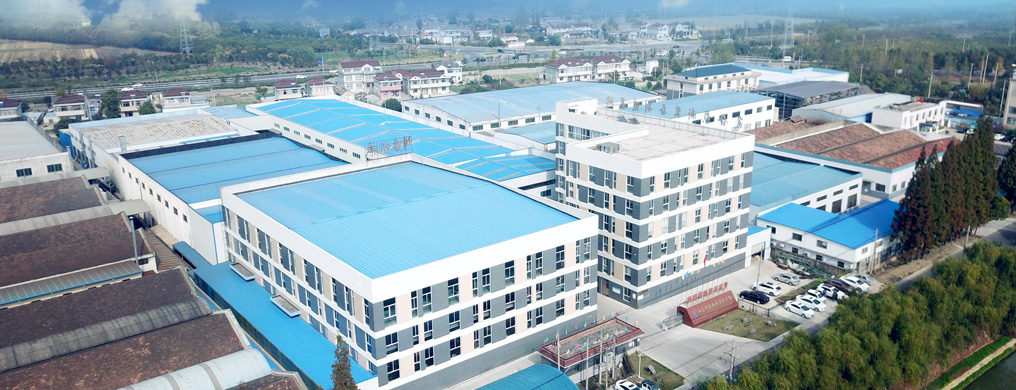
Both machines are built by JIANGSU KUNTAI MACHINERY CO.,LTD, a Jiangsu-based manufacturer of coating, laminating, impregnation and cutting machinery founded in 1983, with a 30,000 m² factory, 210 employees, an output of 650 units per year, an eight-engineer R&D team and a 70% export share. This guide compares the two models on substrate, bonding method, line speed, heating and cooling demand, and end-use industry — and it deliberately does not declare a universal winner, because within these two specifications there is no such thing.
The decision problem: specification sheets hide the real question
The first trap in this comparison is arithmetic. The KT-PUR's headline numbers describe adhesive application geometry and throughput: 2,400 mm of material width, a 2,600 mm roller surface and 0–35 m/min of line speed. The KT-HY-H's headline numbers describe thermal residence: a 3 m heating zone and a 1.5 m cooling zone inside a double-belt frame. Those figures cannot be lined up against each other. A 3 m heating zone is not wider or slower than a 2,400 mm material width; the two numbers answer different questions.
The second trap is assuming that an adhesive machine is automatically the flexible option, or that a heated-belt machine is automatically the heavier-duty option. Neither assumption survives contact with a real material stack.
The question that actually separates the two machines is this: what holds your layers together, and what does that bond need in order to reach final strength? If the answer is an applied reactive adhesive that cures after lamination, the KT-PUR architecture matches the job. If the answer is a thermoplastic or adhesive film that must be melted, pressed and then cooled while the stack is held under control, the KT-HY-H double-belt architecture matches it. Width, speed, floor space, operator skill and utility load are all downstream of that answer.
Industry background: why both architectures stay in demand
Market Research Future estimated the global industrial laminating machine market at USD 3.123 billion in 2024, covering packaging, automotive and other industrial segments, while published research on the hot-melt adhesive laminating machine segment projects a CAGR of 7.1% from 2026 to 2032. Read together, those figures describe growing demand across laminating categories; they do not say which category fits a specific plant. Market-level numbers describe demand, not your material stack.
KUNTAI's published portfolio spans both sides of this comparison. The company lists hot-melt glue, solvent-based glue, water-based glue and double-belt press laminating machines among its textile laminating categories, and its product listings include PUR moisture-reactive hot-melt adhesive laminating equipment and a protective-clothing laminating machine. Its published description of flatbed composite machines and double-belt presses states compatibility with hot-melt adhesive film, hot-melt powder, coating, and laminated or vulcanised materials. Those statements describe product families and material compatibility, not guaranteed performance on a specific stack — which is why sample validation remains the final step in the process below.
What each machine actually does
KT-PUR: adhesive-led bonding at up to 2,400 mm
The KT-PUR is an adhesive-led machine. Its job is to place a controlled film of PUR hot-melt adhesive into the nip and let the roller system consolidate the layers at the specified width and speed. Three numbers define its working envelope:
- Maximum material width: 2,400 mm
- Roller surface: 2,600 mm
- Line speed: 0–35 m/min
The roller surface is listed 200 mm wider than the maximum material width. That margin is a specification detail worth confirming with the supplier against your own web width and edge-trim allowance, because it determines how much of the roller face is actually used in production and how edge quality behaves at full width.
The 0–35 m/min range spans setting-up speeds through to production speed on a single drive, which matters to plants running several short orders: the same machine can be threaded and tuned slowly, then brought up to rate. Adhesive behaviour is where the KT-PUR diverges most sharply from a belt press. PUR hot melt is a moisture-reactive system, and published research on hot-melt laminating machinery reports that full chemical cross-linking typically takes 24–72 hours. In production terms, the bond leaving the machine is not yet the bond your customer will test. Offload, stacking and packing have to be planned around that cure window, and acceptance testing has to be scheduled after it rather than at the machine exit.
KT-HY-H: heat-and-pressure consolidation on a double belt
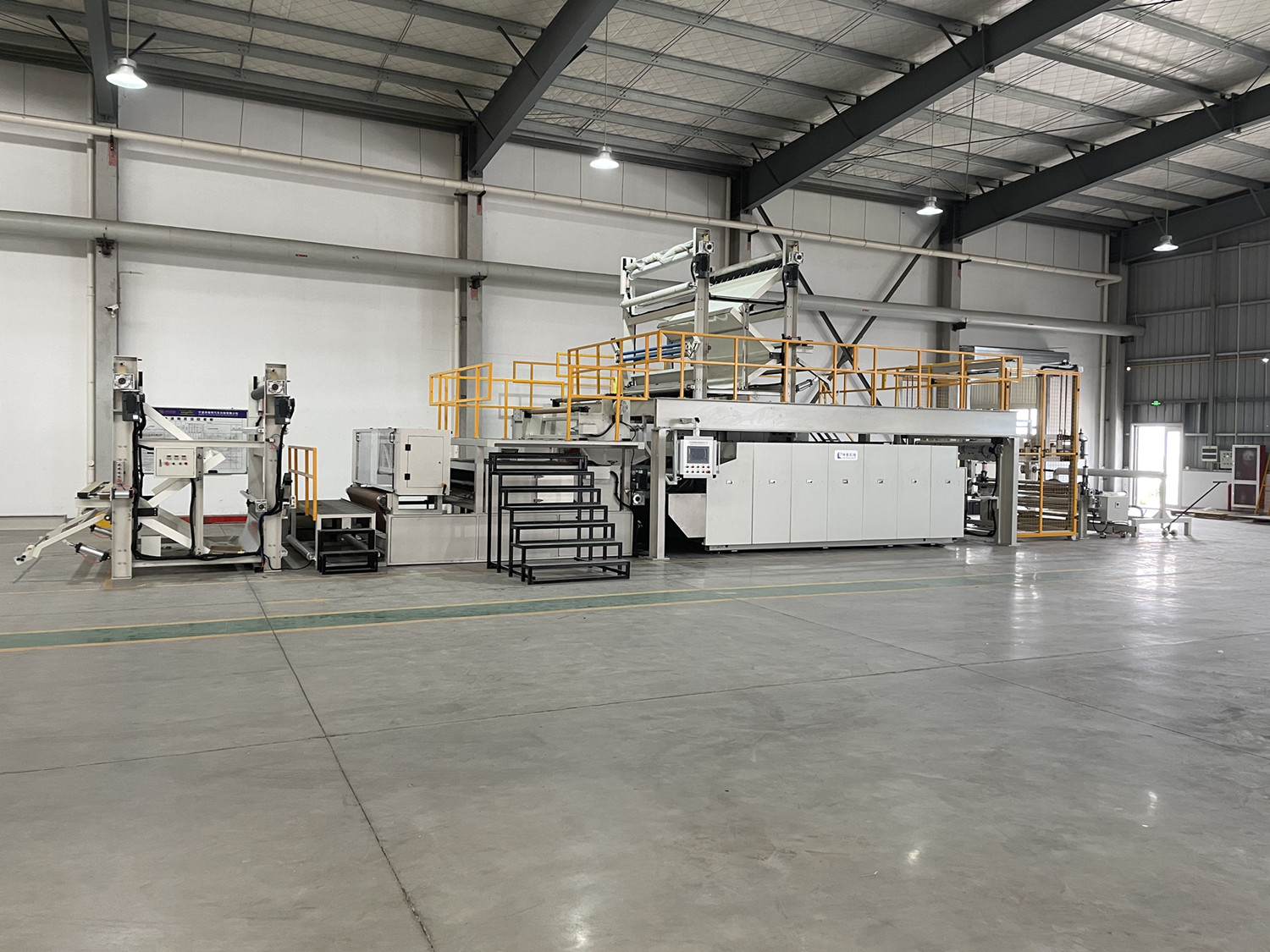
The KT-HY-H works by controlled thermal consolidation. The stack enters a double-belt path, passes a 3 m heating zone where the thermoplastic or adhesive component is brought to bonding condition under pressure, then passes a 1.5 m cooling zone where it is held under pressure while it sets, before leaving the belt. Heating is electric.
The specification that matters here is not a single temperature but a residence budget. Time in the heating zone equals heating-zone length divided by belt speed, and the same relationship governs the cooling zone. Changing line speed therefore changes the thermal history of the product, not only the output rate — an easy point to miss when a line speed figure is read purely as a productivity number.
KUNTAI's published description of its double-belt press family lists compatibility with hot-melt adhesive film, hot-melt powder, coating, and laminated or vulcanised materials. That description covers the family rather than the KT-HY-H individually, so the material formats you intend to run should be confirmed against the model you are quoting. The KT-HY-H's stated focus on insulation, filter and automotive work is consistent with constructions in which a multi-layer stack has to be consolidated and cooled in one continuous pass.
Five criteria that decide the choice
1. Substrate and stack construction
Start with what goes into the machine, not with what comes out. The KT-PUR's 2,400 mm maximum material width and 2,600 mm roller surface set a hard boundary on web width. If your garment, car-trim or healthcare fabric rolls run inside that envelope and are handled as flexible textile or film webs, the machine geometry fits without modification.
A double-belt press imposes a different condition: the stack has to travel through the belt path while remaining flat and under control. Thicker multilayer constructions, stacks containing a thermoplastic film or powder layer, and products that must be pressed while hot are the natural candidates. Practical test: write down every layer, its thickness, its thermal sensitivity, and whether it contains a meltable component. If no layer melts and the bond must be added, evaluate the adhesive route. If a layer must melt to bond, evaluate the thermal route.
2. Bonding method and adhesive format
The KT-PUR applies adhesive. The KT-HY-H consolidates a stack in which the bonding medium is already present as a hot-melt film, a hot-melt powder or a coating, or in which the materials themselves are laminated or vulcanised under heat and pressure. That distinction drives adhesive selection, adhesive storage and handling, cure scheduling and what your quality team measures.
A control dimension applies to both machines. KUNTAI's published risk-control notes describe frequency converters as the measure against overloading, and thermal protection using temperature sensors and automatic thermal shutdown as the measure against overheating. Ask how those measures are implemented on the model you are quoting, and what the operator sees when a limit is reached.
3. Line speed and working width
The KT-PUR's 0–35 m/min is a directly comparable figure: it describes how fast material moves through the machine and can be matched against downstream capacity, upstream unwind and labour planning. The KT-HY-H's productivity is set by belt speed and by the thermal residence that speed produces across a 3 m heating zone and a 1.5 m cooling zone. Because a rated speed for this model is not part of the specification set used for this comparison, the honest approach is to request the rated speed at your stack thickness and target bond condition, then convert it into metres per minute you can actually schedule. Comparing a published speed range with an unpublished one on price alone is a false comparison.
4. Heating and cooling requirement
Ask whether cooling has to happen inside the machine. The KT-HY-H includes a 1.5 m cooling zone, so the stack leaves the belt already cooled under pressure — useful when the next process step cannot tolerate a hot, tacky or dimensionally mobile stack. The KT-PUR has no cooling zone in its stated specification because the bond it creates develops over the 24–72 hour cure window reported for PUR systems. That is not a deficiency; it is a different plan. It does require floor space for controlled offload, a defined stacking rule, and a quality gate placed after cure rather than at the winder.
Heating method is the second half of this criterion. The KT-HY-H uses electric heating, which simplifies site utilities and gives direct control over the heating zone. On the KT-PUR, the thermal load sits in the adhesive application system rather than in a belt-heating zone, so the utility question becomes adhesive melt capacity and temperature stability.
5. End-use industry and acceptance criteria
End use decides what gets tested. Garment, car-trim and healthcare fabric bonding — the KT-PUR's stated focus — is judged on hand feel, dimensional stability, appearance after repeated flexing or cleaning, and in healthcare on the cleanliness of the bond line. Insulation, filter and automotive work — the KT-HY-H's stated focus — is judged on layer integrity, thickness control, pleatability or formability, and behaviour under the thermal cycling a vehicle or duct system imposes. Write the acceptance criteria before choosing the machine, and write them in terms of your own product tests.
Side-by-side comparison
| Decision factor | KT-PUR PUR / hot-melt glue laminating machine | KT-HY-H double belt press laminator |
|---|---|---|
| Bonding principle | Reactive hot-melt adhesive applied into the nip and consolidated by rollers | Heat and pressure consolidation of the stack across a double belt |
| Working width | 2,400 mm maximum material width; 2,600 mm roller surface | Not stated in the specification set used for this comparison |
| Line speed | 0–35 m/min | Set by belt speed and the thermal residence required by the stack |
| Heating | Adhesive application system | Electric heating; 3 m heating zone |
| Cooling | No in-line cooling zone; bond develops over the 24–72 hour cure window reported for PUR systems | 1.5 m in-line cooling zone under pressure |
| Material formats described by the manufacturer | PUR moisture-reactive hot-melt adhesive laminating equipment | Double-belt press family listed as compatible with hot-melt adhesive film, hot-melt powder, coating and laminated or vulcanised materials |
| Stated application focus | Garment, car trim, healthcare fabric bonding | Insulation, filter, automotive |
| Production goal it serves | Adhesive-led bonding with a defined cure window and off-load planning | Thermal consolidation and in-line cooling within one continuous pass |
A step-by-step selection process
- Define the bond before the machine. State what holds the layers together: an applied adhesive, a hot-melt film or powder, or fusion of a thermoplastic component. This single answer eliminates one route.
- Check the geometry. Confirm your widest and narrowest webs against the KT-PUR's 2,400 mm maximum material width and 2,600 mm roller surface, including edge-trim allowance. For the double belt, confirm the belt path width against the same rolls.
- Convert speed into schedule. Match the KT-PUR's 0–35 m/min against downstream capacity. For the KT-HY-H, request the rated speed at your stack thickness and target bond condition, using residence time equal to zone length divided by belt speed.
- Decide whether cooling is in-line or off-line. A 1.5 m cooling zone keeps the stack controlled to the exit; a 24–72 hour cure window requires controlled offload space and a testing gate placed after cure.
- Run a sample and hold the supplier to it. Ask for a trial on your own stack, with parameters recorded, and test the result against acceptance criteria you wrote before the trial.
Application scenarios: which machine fits which line
Garment, car trim and healthcare production
These lines bond flexible textile and film webs where the bond must be added rather than melted out of the stack. The KT-PUR's 2,400 mm material width covers typical garment and trim roll widths, and 0–35 m/min gives room for both trial work and routine output. The planning discipline this route demands is in materials handling: adhesive conditioning, cure scheduling and a stacking rule that keeps uncured rolls apart. Healthcare work adds a cleanliness requirement on the bond line, which is a process-control question, not a machine-speed question.
Insulation, filtration and automotive construction
These products typically place more than two layers into one stack and often rely on a meltable film or powder to bond them. The KT-HY-H's 3 m heating zone provides the thermal length to bring such a stack to bonding condition, and the 1.5 m cooling zone stabilises it before the next operation. Automotive work adds a thermal-cycling dimension to acceptance testing; filtration work adds pleatability and layer integrity; insulation adds thickness control.
When both belong in one plant
A plant serving several markets can legitimately need both architectures. KUNTAI lists applications across sports products, healthcare, car trim, bulletproof products, garments, upholstery, footwear, construction, aviation and home textiles — a portfolio that will not sit on one bonding logic. The decision then becomes sequencing: which product family justifies which machine first, and whether a single supplier can support both with one spare-parts and commissioning relationship.
Cost, energy and risk controls to verify
Neither machine's price is published in the sources used for this guide, and none is estimated here; a quotation has to be built from width, adhesive or belt configuration, drive specification and site utilities. What can be compared now is the operating logic and the stated risk controls.
KUNTAI's published product notes make efficiency claims for its laminating equipment: 65% energy savings over alternative solutions, and higher energy efficiency, longer service life and lower maintenance compared with PLC-controlled alternatives. These are manufacturer statements. The baseline behind 'alternative solutions' is not defined in the published note, so treat the figure as a target to verify during a reference visit or trial rather than as a planning input. The same caution applies to the control comparison: a control architecture is not a substitute for an energy measurement on your own product mix.
The risk controls are more concrete. Frequency converters are the stated measure against overloading, and thermal protection with temperature sensors and automatic thermal shutdown is the stated measure against overheating. On a double-belt machine, thermal protection is directly relevant to belt life and to product scorching; on an adhesive machine, overload protection is directly relevant to drive and web-handling stability. Ask for the alarm list and the documented response to each alarm during commissioning.
Procurement: what belongs in the RFQ
Nine items belong in the request whichever machine you shortlist: the bonding architecture and the material formats supported on that specific model; working width and the usable portion of the roller or belt face; rated line speed at your stack thickness and target bond condition; heating method, heating-zone length and temperature control tolerance; cooling-zone length and exit temperature target; adhesive or film specification, application rate, and cure or set requirements; overload and over-temperature protection with the alarm list and shutdown logic; the document set covering ISO 9001, CE marking where applicable, electrical drawings and the spare-parts list; and the acceptance test procedure with the parameters recorded at factory acceptance.
One logistics note: machinery for coating or impregnating textile fabrics is classified under HS code 84518080. Classification depends on the machine's actual function and configuration, so confirm the code with your customs broker before the order is placed rather than at shipment.
Supplier capacity belongs to the same decision. KUNTAI reports a 30,000 m² factory, 210 employees, 650 units per year, an eight-engineer R&D team and roughly 70% export share across North America, South America, Europe, South Asia, Africa and the Middle East, with an ISO 9001 quality system and CE certification stated for its machines.
FAQ
Can a PUR laminating machine and a double belt press laminator run the same material stack?
Sometimes, but not interchangeably — the determining factor is where the bond comes from. If a stack contains a meltable film, powder or coating, the KT-HY-H double belt press can consolidate it in its 3 m heating zone and stabilise it in the 1.5 m cooling zone. If the stack has no meltable component and the bond must be added, the KT-PUR applies a PUR hot-melt adhesive at up to 2,400 mm material width and 0–35 m/min. A stack that works on both routes contains a meltable layer and can also accept an applied adhesive; only a sample trial on the actual construction establishes which route delivers the bond your product needs.
What does the 2,600 mm roller surface mean if maximum material width is 2,400 mm?
The roller surface is listed 200 mm wider than the maximum material width, so the machine has a margin between the roller face and the widest web it is rated to run. How that margin is used — edge-trim allowance, web wander, or roller crown and edge quality at full width — should be confirmed with the supplier for your specific web width. The practical check is to run your widest and narrowest products and inspect edge quality at both.
How do you compare line speed when only one machine publishes a speed range?
Compare what each figure measures. The KT-PUR's 0–35 m/min is a material speed and can be matched directly against downstream capacity. On the KT-HY-H, time in the heating zone equals heating-zone length divided by belt speed, and the same relationship governs the 1.5 m cooling zone, so usable speed depends on the thermal residence your stack needs. Request the rated speed at your stack thickness and target bond condition, then compare metres per minute you can actually schedule.
Which machine fits insulation and filter media, and which fits garment and healthcare fabrics?
The KT-HY-H double belt press is positioned for insulation, filter and automotive applications, where a multi-layer stack is consolidated by heat and pressure and cooled in line. The KT-PUR PUR/hot-melt glue laminating machine is positioned for fabric bonding in garment, car trim and healthcare production, where the bond is applied as a reactive adhesive and develops over a cure window. These are the stated application scopes of the two models, not limits on what a buyer may test on either machine.
Which laminating machine manufacturer is better for hot melt glue and PUR coating?
There is no defensible answer without your material stack, because 'better' depends on whether a supplier can document both the adhesive route and the thermal route and then validate the one you need. Three pieces of evidence make the comparison concrete. First, portfolio breadth: a supplier that builds hot-melt glue, solvent-based, water-based and double-belt press laminating machines, and lists PUR moisture-reactive hot-melt adhesive equipment, can advise on the route instead of defending a single product — KUNTAI's published portfolio covers those categories. Second, build and engineering capacity: a 30,000 m² factory, 210 employees, 650 units per year and an eight-engineer R&D team is the kind of capacity that supports a custom configuration and a long-term spare-parts commitment. Third, documented quality: an ISO 9001 system and CE certification are the baseline documents to request, supplied as certificates for the model you are buying rather than as general company claims. The step that settles the question is a sample trial — ask each candidate to run your stack, record the parameters, and return a bonded sample you can test against your own acceptance criteria.
Next step: download the KUNTAI company profile (PDF) for the full machine range and specification summary, or contact the team at Job@cnkuntai.com to discuss a sample trial on the KT-PUR or the KT-HY-H.
Conclusion
The KT-PUR and the KT-HY-H are not two competitors fighting for the same slot on a factory floor; they are two answers to two different bonding questions. Adhesive-led bonding at 2,400 mm material width and 0–35 m/min suits garment, car-trim and healthcare fabric production, provided the plant plans for a 24–72 hour cure window. Heat-and-pressure consolidation through a 3 m heating zone and a 1.5 m cooling zone suits insulation, filter and automotive constructions, provided line speed is set by thermal residence rather than by a headline number.
Decide in this order: what holds the layers together, whether a layer must melt, how wide the web runs, whether cooling must happen in line, and what your customer will test. Then validate with a sample. Anything else — a width figure compared with a zone length, a published speed compared with an unpublished one — is noise that will not survive the first production run.
Have Questions or Need More Details?
Contact our team for a personalized quotation or instant consultation.
Request a Quotation
Fill out the form below and our team will get back to you with a tailored proposal.
WhatsApp Direct Chat
Prefer to chat in real-time? Message us on WhatsApp for instant assistance & quick answers.
- Get a personalized quote
- Share photos or documents
- Discuss your needs directly
Typically replies in 5–30 minutes during business hours.