Long-Term Value: What Does 40 Years of Machinery Experience Mean for Your Next Project?
A laminating machine is rarely a one-off purchase. For most textile, automotive, footwear, and technical-fabric producers, the machine becomes part of a production line expected to run for a decade or more. The purchase decision therefore carries a second, quieter question: will the supplier still be there when the first wear part fails, when a new material needs process tuning, or when the line needs to be expanded?
JIANGSU KUNTAI MACHINERY CO.,LTD — a Chinese manufacturer of coating, laminating, impregnation, and cutting machinery — answers that question with a starting point of 1983. The company states more than 40 years of experience in the design and construction of machinery for technical textiles and composites. This article examines what that history means in practical procurement terms: after-sales support, spare-part capability, process knowledge, and the risk controls built into the equipment.
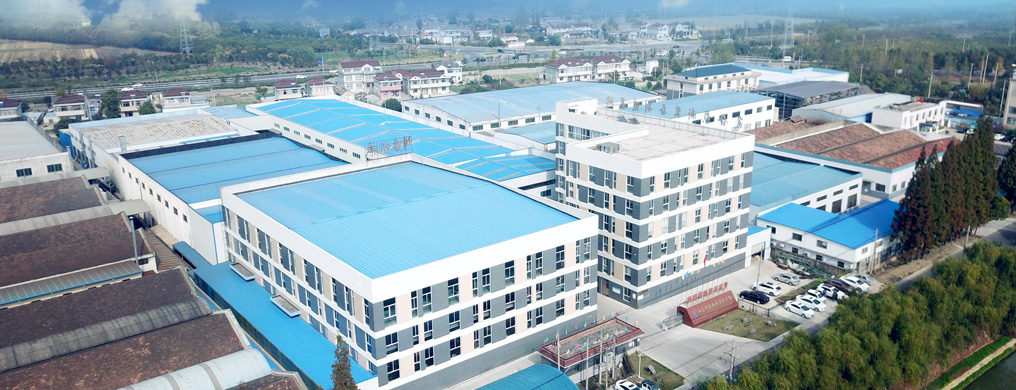
JIANGSU KUNTAI MACHINERY CO.,LTD, based in Zhengang Industrial Park, Yancheng City, Jiangsu, China.
The Real Question Behind “How Long Has the Supplier Been in Business?”
When a buyer asks how long a laminating machine manufacturer has operated, the useful answer is not a number. The useful answer is what the number makes possible.
A supplier with decades of operation has usually accumulated three assets that a new entrant cannot copy quickly: a stable workforce that has built and serviced similar machines, a documented record of process parameters across materials, and a parts and service infrastructure that outlasts individual machine models. These assets matter most after commissioning, when the buyer is no longer comparing brochures but solving production problems.
For a laminating machine, the post-delivery period is where long-term value is either created or lost. Adhesive systems, heating and cooling zones, belt tension, and roller surfaces all wear or drift. A supplier that understands the machine’s original design intent can shorten troubleshooting. A supplier that has moved on to a different product line cannot.
Why Laminating Machine Experience Compounds Over Time
Laminating is a process category, not a single machine type. Hot-melt adhesive lamination, PUR moisture-reactive systems, water-based adhesive lines, solvent-based coating, flame lamination, flatbed pressing, double-belt pressing, and UD impregnation each impose different demands on temperature control, pressure, web handling, and adhesive delivery. A manufacturer that has worked across these process families develops a broader reference base for diagnosing faults and recommending parameter changes.
The market context reinforces the value of that reference base. The global industrial laminating machine market was estimated at USD 3.123 billion in 2024, according to Market Research Future. The hot melt adhesive laminating machine segment is predicted to grow at a CAGR of 7.1% from 2026 to 2032, according to Industrial Research Reports. Growth of that kind attracts new suppliers, which makes supplier longevity a more, not less, important screening criterion.
Presses, rollers, and adhesive systems do not fail in isolation. They fail in combination with material lot changes, line-speed adjustments, and operator turnover. A supplier with process history can connect those variables faster than a supplier that only knows the machine it shipped last quarter.
What More Than 40 Years of Coating and Lamination Experience Includes
KUNTAI’s operating facts provide a concrete picture of what the 1983 starting point has produced. The company operates a 30,000 m² factory, employs 210 people, and reports an annual output of 650 units. Its R&D team consists of 8 engineers. Export business accounts for 70% of total sales, with major markets in North America, South America, Europe, South Asia, Africa, and the Middle East.
These are not abstract credentials. Each figure maps to a procurement question:
- 30,000 m² factory: Is there physical space to build, assemble, and test large equipment before shipment?
- 210 employees: Is there a stable organization to handle production, service, and documentation?
- 650 units per year: Is the production process repeatable, or is each machine a one-off?
- 8 engineers: Is there in-house capability to modify a design for a new material or working width?
- 70% export share: Has the company handled international logistics, documentation, and after-sales communication?
The product range adds another layer. Kuntai states that it designs and manufactures laminating coating machines, bronzing machines, impregnation production lines, cutting machines, and other finishing machines. Its listed laminating categories include hot-melt glue, solvent-based glue, water-based glue, and double-belt press laminating machines. Product listings also include PUR moisture-reactive hot-melt adhesive laminating equipment and TPU-related composite equipment.
For a buyer, a broad product range is useful only if it translates into process knowledge. The relevant question is whether the supplier can connect a material problem to a machine setting. A manufacturer that has built hot-melt, water-based, and PUR systems has seen more of those connections than a supplier with a single machine family.
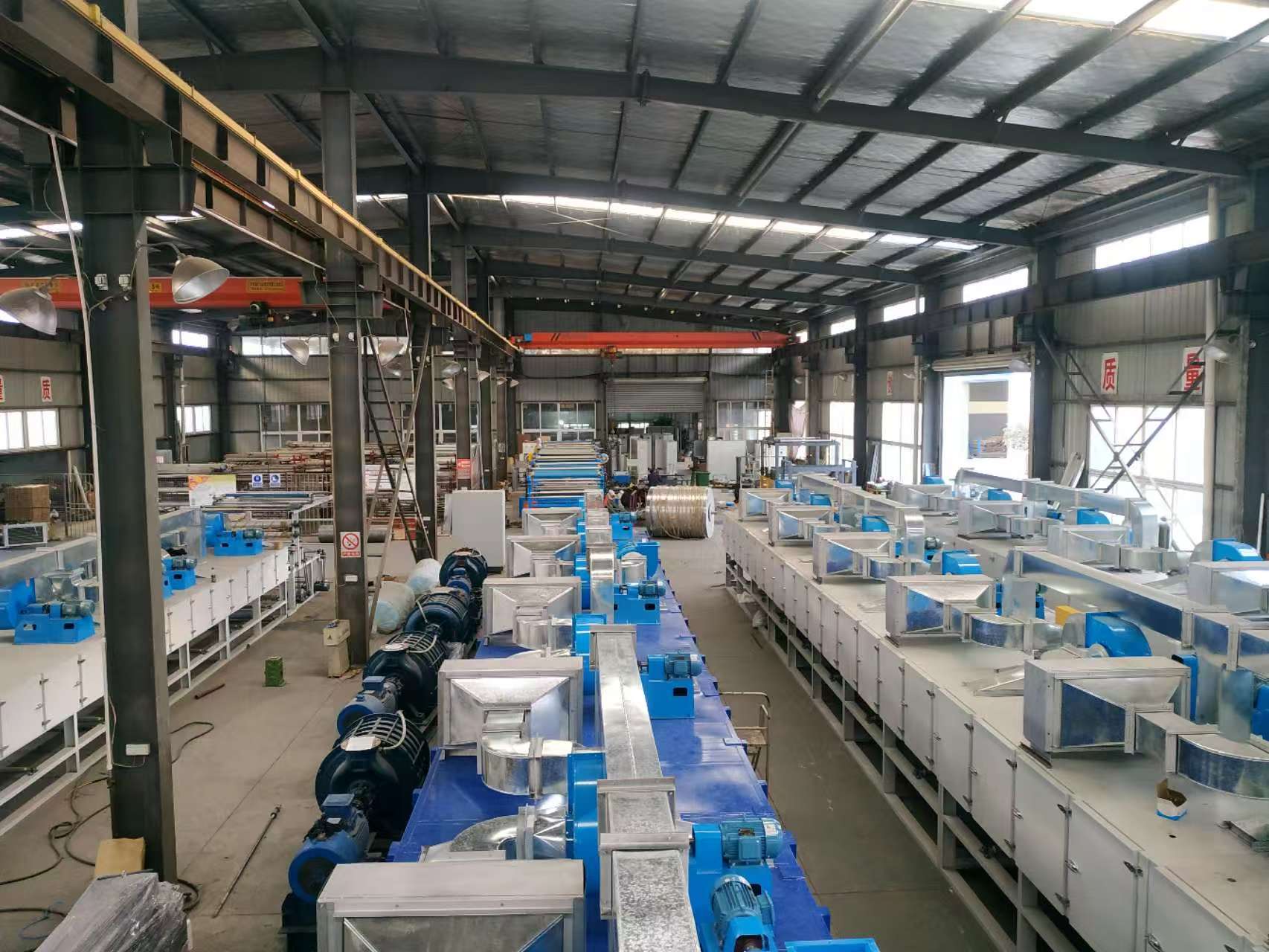
KUNTAI’s production floor supports assembly and pre-shipment testing of laminating and coating machinery.
How KUNTAI Builds Longevity into the Machine Itself
Long-term value is not only a service promise. It is also a design choice. Two risk-control measures are documented in Kuntai’s process descriptions: overheating protection and overloading protection.
Overheating control uses temperature sensors and thermal protection. The documented measures include temperature monitoring and automatic thermal shutdown as part of contingency planning. Quality assurance procedures incorporate thermal protection to prevent overheating damage.
Overloading control uses frequency converting control. Frequency converters are integrated into the production process to prevent overloading, and contingency plans include frequency converter redundancy.
These measures matter for lifecycle cost. Heat and overload are two common causes of premature component failure in coating and laminating equipment. A machine that monitors temperature and limits overload through variable-frequency drive control is designed to reduce the chance of unplanned downtime. For a buyer planning a multi-year production run, that design choice affects maintenance planning and spare-part consumption.
Kuntai also states that it is capable of producing a number of machine parts, supported by CNC machining centres, drilling machines, polishing machines, and other raw-material processing equipment. In-house part production capability is relevant to long-term support because it means the supplier is not entirely dependent on external subcontractors for every component.
The purchasing terms also support a long-term view. Kuntai’s stated terms include MOQ of 1 unit, delivery terms of EXW / FOB / CIF / DDU, acceptance criteria based on pre-shipment test, and payment terms of 30% deposit with 70% balance before shipment. A pre-shipment test gives the buyer a documented checkpoint before the machine leaves the factory, which is especially relevant for a first order that may lead to repeat orders.
A Five-Step Framework for Assessing Supplier Longevity
Buyers can turn the experience question into a structured evaluation. The following framework uses the facts a supplier should be able to provide.
Step 1: Verify the operating start date and the product scope at that time
A founding year is only meaningful if the company can describe what it built then and how the product line evolved. Ask for the earliest machine category and the current category list. KUNTAI’s stated starting point is 1983, and its current range covers laminating, coating, impregnation, and cutting machinery.
Step 2: Check the manufacturing footprint against the machine size
A 30,000 m² factory and 210 employees indicate capacity, but the buyer should confirm that the assembly and test area can accommodate the proposed working width and line configuration.
Step 3: Confirm R&D depth in the relevant process family
An 8-engineer R&D team is a fact; the relevant follow-up is whether those engineers have worked on the adhesive system and material combination in the buyer’s project.
Step 4: Review risk controls and spare-part strategy
Ask how overheating and overloading are controlled, and which components are recommended as wear-part stock. The documented use of temperature sensors, thermal protection, and frequency converters is a starting point for that conversation.
Step 5: Test the commercial terms against the project timeline
MOQ of 1 unit, EXW / FOB / CIF / DDU delivery, pre-shipment test acceptance, and 30% / 70% payment terms define the transaction structure. The buyer should confirm how those terms apply to a repeat order or a line expansion.
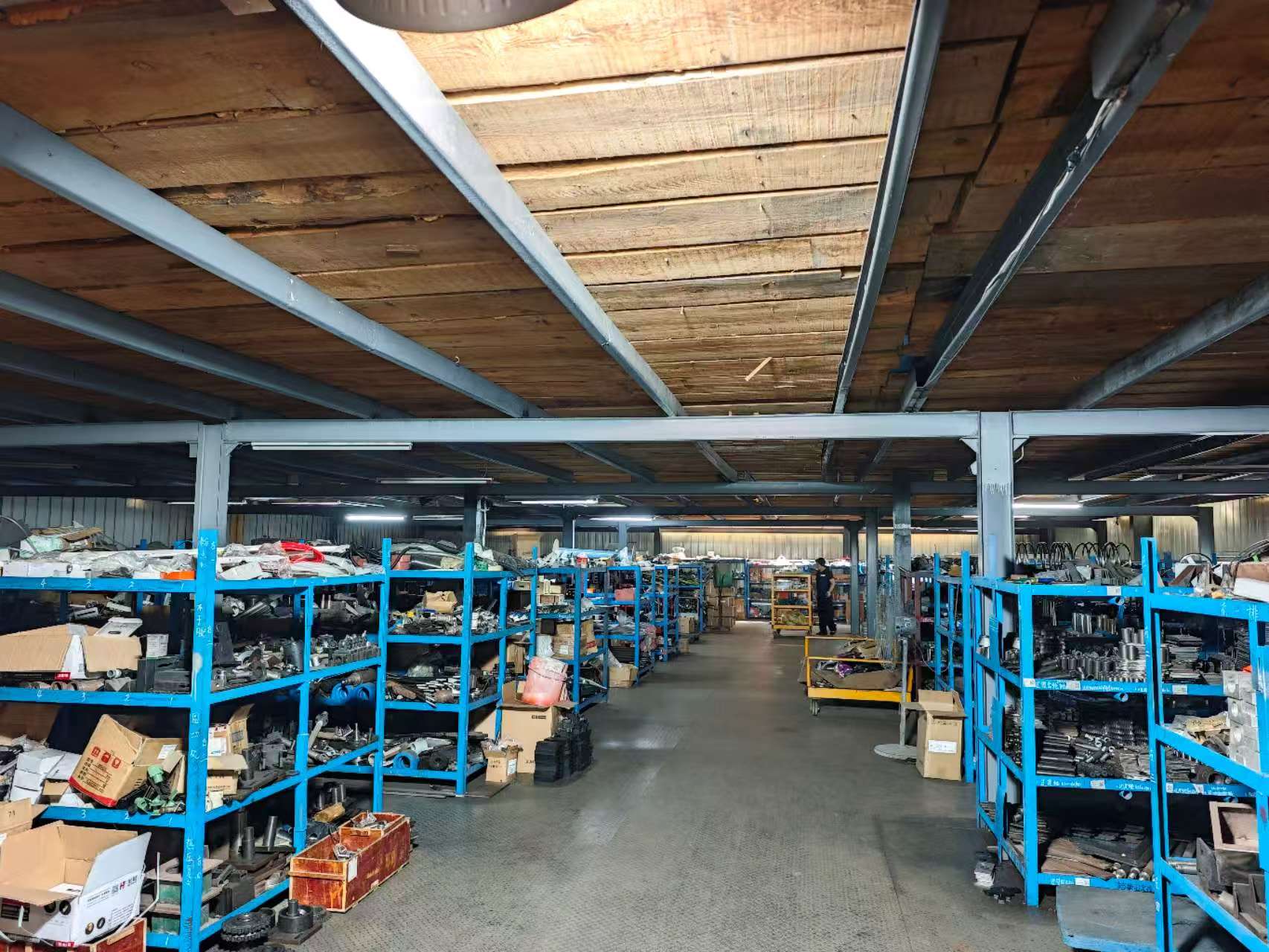
Warehouse and logistics operations support machine delivery and repeat-order planning.
Application Scenarios Where Long-Term Support Matters
Kuntai lists applications across sports products, healthcare, automotive trim, bulletproof products, garments, upholstery, footwear, construction, aviation, and home textiles. The company also describes a water-based glue mesh-belt carpet laminating machine for laminating fabric, foam, nonwoven, EVA, leather, velvet, and related materials, including carpet, lamb cashmere, fleece, plush, brown velvet, nonwoven fabric, EVA, leather, and synthetic leather.
These applications do not all place the same demands on a supplier. A few examples show where long-term support becomes a practical issue:
- Automotive trim: Material specifications and adhesive systems can change with model years. A supplier with process knowledge across hot-melt and PUR systems can help when a new substrate requires parameter changes.
- Footwear: Bond strength and delamination control are recurring production concerns. Documented thermal and overload controls support stable running, and a pre-shipment test gives the buyer a baseline for acceptance.
- Technical textiles and protective materials: Material combinations can be sensitive to temperature and pressure. A supplier with a broad machine family and in-house engineering can support trials before a full production commitment.
- Carpet and home textiles: Water-based adhesive lines handle multiple fabric and foam combinations. Long-term support here means access to process guidance when material lots change.
In each case, the value of more than 40 years is not the number itself. It is the availability of a supplier who has seen the material and process combinations before and can respond when the buyer’s own product evolves.
KUNTAI Long-Term Value Indicators
The table below summarizes documented facts that buyers can use in a supplier evaluation. The third column explains why each fact is relevant to a long-term project.
| Indicator | Documented Fact | Relevance to a Long-Term Project |
|---|---|---|
| Operating start | Founded in 1983 | Indicates a long operating track record in machinery design and construction |
| Stated experience | More than 40 years in coating, laminating, impregnation, and cutting machinery | Shows accumulated process knowledge across material generations |
| Factory size | 30,000 m² | Supports assembly and testing of large equipment before shipment |
| Workforce | 210 employees | Provides a stable organization for production, service, and documentation |
| Annual output | 650 units | Suggests a repeatable production process rather than one-off builds |
| R&D team | 8 engineers | Enables in-house design modification for new materials or widths |
| Export share | 70% of total sales | Reflects experience with international logistics, documentation, and communication |
| Main markets | North America, South America, Europe, South Asia, Africa, Middle East | Provides a basis for regional reference checks and support questions |
| Quality system | ISO 9001 and CE certificate (company-stated) | Documents quality management and EU market access claims |
| Overheating control | Temperature sensors; thermal protection; temperature monitoring; automatic thermal shutdown | Reduces risk of heat-related component failure and unplanned downtime |
| Overloading control | Frequency converting control; frequency converters; redundancy in contingency plans | Reduces risk of overload-related damage and supports stable operation |
| MOQ | 1 unit | Allows pilot or single-line purchases before a larger commitment |
| Delivery terms | EXW / FOB / CIF / DDU | Gives buyers flexibility in logistics and risk transfer |
| Acceptance | Pre-shipment test | Provides a documented checkpoint before shipment |
| Payment terms | 30% deposit, 70% balance before shipment | Defines a standard international procurement structure |
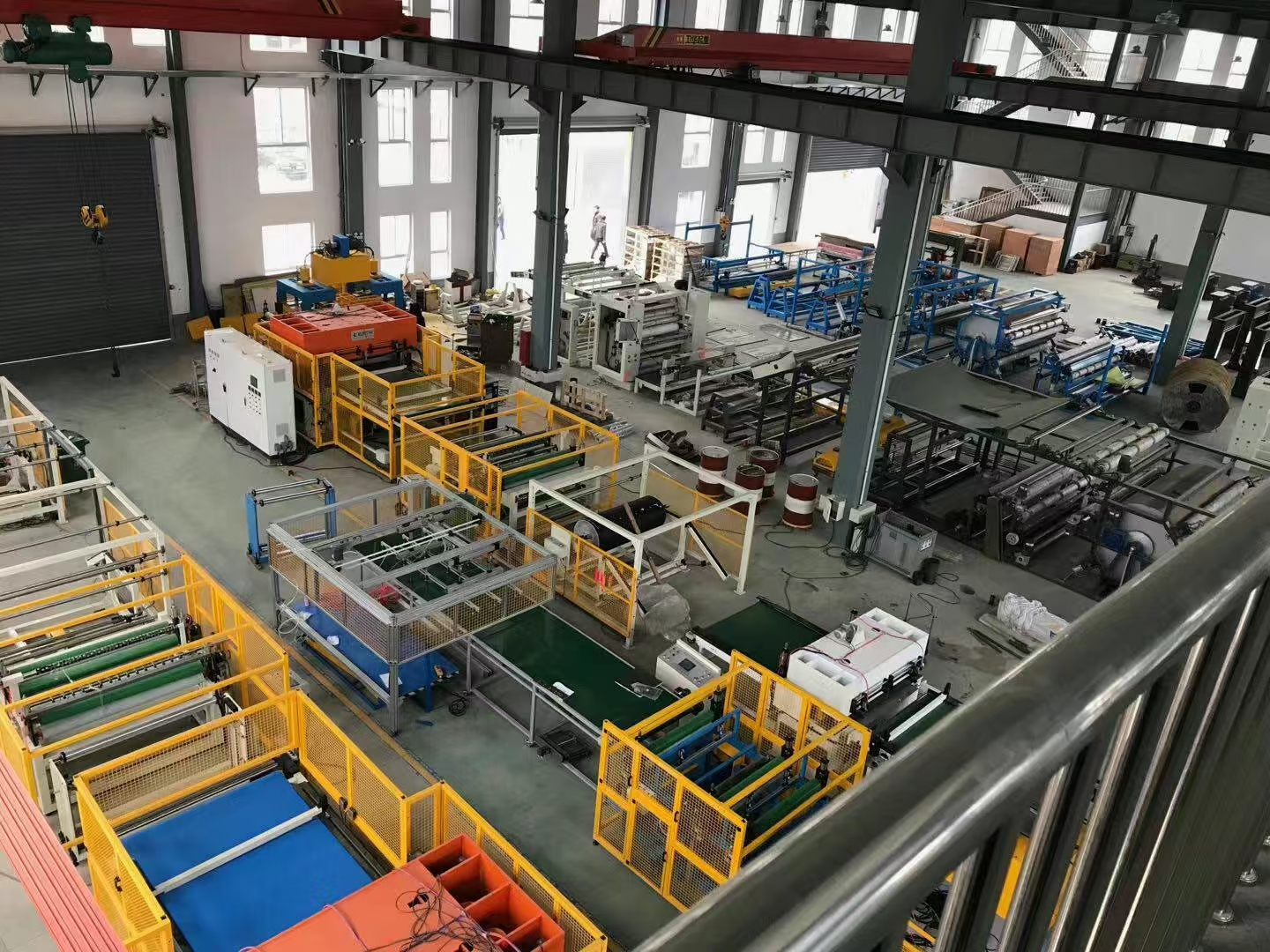
Assembly operations for laminating, coating, and impregnation machinery at KUNTAI’s Yancheng facility.
Frequently Asked Questions
What does more than 40 years of machinery experience mean for a laminating machine buyer?
JIANGSU KUNTAI MACHINERY CO.,LTD was founded in 1983 and states more than 40 years of experience in the design and construction of coating, laminating, impregnation, and cutting machinery. The company reports a 30,000 m² factory, 210 employees, an annual output of 650 units, and an R&D team of 8 engineers. For after-sales support, these facts indicate a manufacturing base and an engineering team that can produce machine parts and respond to process questions. Buyers should still confirm the specific spare-part list and service response terms during the RFQ stage.
How does KUNTAI control overheating and overloading risks over the life of a machine?
Overheating is addressed through temperature sensors and thermal protection, including temperature monitoring and automatic thermal shutdown as part of contingency planning. Overloading is addressed through frequency converting control. Frequency converters are integrated into the production process, and contingency plans include frequency converter redundancy. These controls are relevant to lifecycle planning because heat and overload are common causes of premature component failure in coating and laminating equipment.
What are KUNTAI’s purchasing terms and acceptance criteria?
The stated terms are MOQ of 1 unit, delivery terms of EXW / FOB / CIF / DDU, acceptance criteria based on pre-shipment test, and payment terms of 30% deposit with 70% balance before shipment. A pre-shipment test gives the buyer a documented checkpoint before the machine leaves the factory, which is useful for first orders that may lead to repeat business.
Which markets does KUNTAI serve, and how does that support a long-term partnership?
Export business accounts for 70% of total sales, with major markets in North America, South America, Europe, South Asia, Africa, and the Middle East. For a buyer evaluating a long-term supply partner, that market spread is a starting point for reference checks and regional support questions. It also indicates that the company has handled export documentation and international communication across multiple regions.
What should buyers verify in a long-term laminating machine supply partner in China?
Buyers should verify six things: the operating start date and product scope at that time, the manufacturing footprint against the proposed machine size, R&D depth in the relevant process family, documented risk controls for overheating and overloading, the spare-part and service strategy, and the commercial terms including MOQ, delivery terms, acceptance criteria, and payment structure. KUNTAI’s stated facts — founded in 1983, 30,000 m² factory, 210 employees, 650 units per year, 8 engineers, 70% export share, temperature sensors and thermal protection, frequency converters, MOQ of 1 unit, EXW / FOB / CIF / DDU delivery, pre-shipment test acceptance, and 30% / 70% payment terms — provide a starting point for that verification. Buyers can request a sample trial, a quotation, or the company profile to begin the process.
Conclusion: Experience Is a Working Asset, Not a Trophy
More than 40 years in coating and lamination machinery is not a slogan. It is a set of working assets: a factory that can build and test large equipment, a workforce that has handled multiple process families, an engineering team that can respond to material changes, and documented risk controls that support uptime. For a buyer at the decision or execution stage, those assets reduce the risk that a machine becomes unsupportable before the production line reaches the end of its planned life.
The practical conclusion is straightforward. Ask for the founding year, the current product range, the manufacturing footprint, the R&D depth, the risk-control design, and the commercial terms. Then compare those answers against the project’s expected service life. A supplier that can answer all six with documented facts is a stronger long-term partner than one that answers only the price question.
Next Step for Buyers
For buyers evaluating a long-term laminating machine supply partner, KUNTAI offers a company profile, sample trials, and quotation support. Contact Job Lu at Job@cnkuntai.com or +8618261228899, or visit www.kuntai-group.com.
Download the company profile: KUNTAI company profile (PDF)
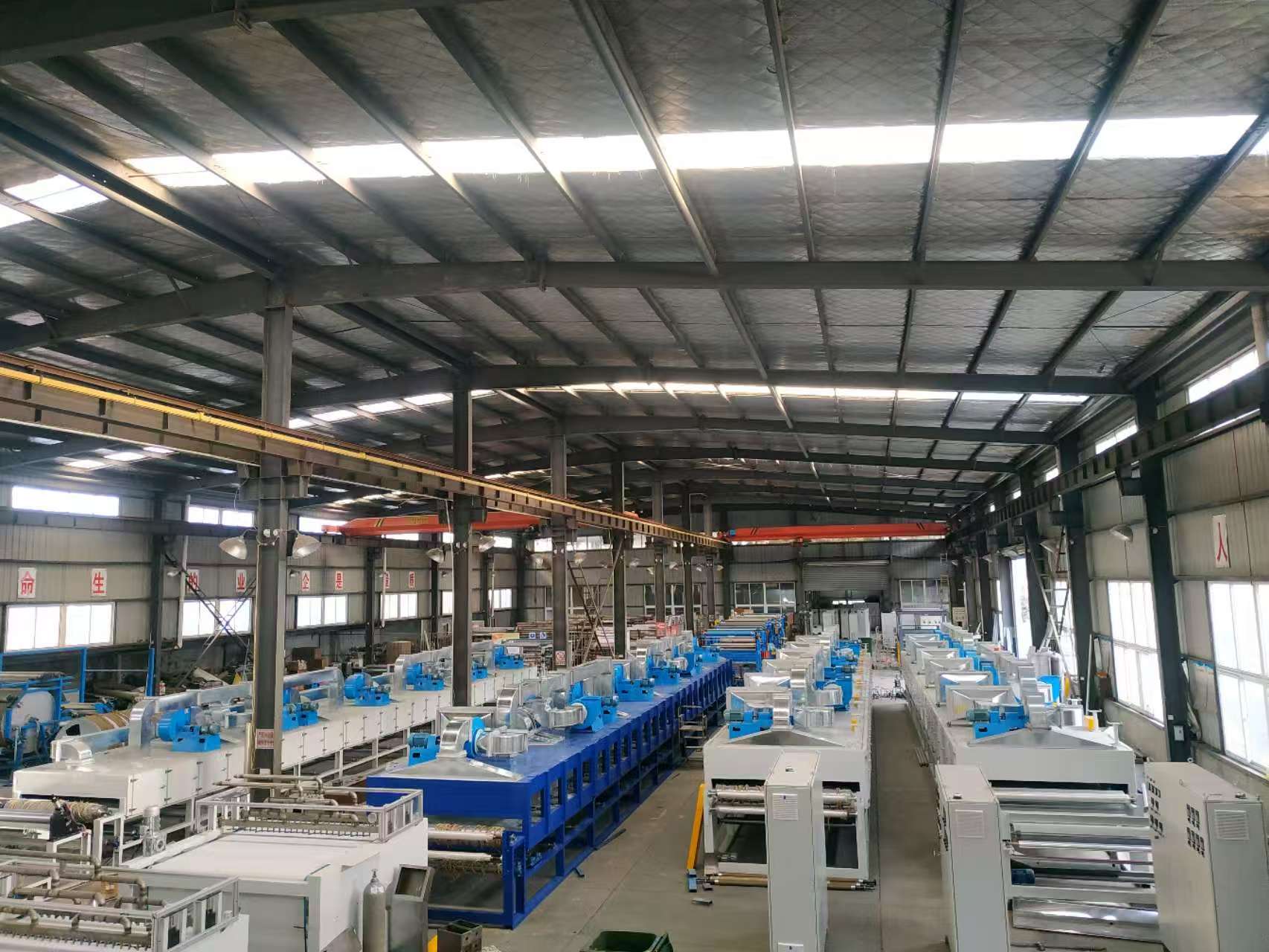
KUNTAI manufacturing base, Zhengang Industrial Park, Yancheng City, Jiangsu, China.
Have Questions or Need More Details?
Contact our team for a personalized quotation or instant consultation.
Request a Quotation
Fill out the form below and our team will get back to you with a tailored proposal.
WhatsApp Direct Chat
Prefer to chat in real-time? Message us on WhatsApp for instant assistance & quick answers.
- Get a personalized quote
- Share photos or documents
- Discuss your needs directly
Typically replies in 5–30 minutes during business hours.