Top 10 Laminating Machines from KUNTAI: A Ranked Recommendation Guide
Laminating Machine Selection · Long-Term Supply
JIANGSU KUNTAI MACHINERY CO.,LTD (KUNTAI) has designed and built coating, laminating, impregnation and cutting machinery for technical textiles and composites since 1983. This guide ranks ten KUNTAI laminating platforms by how directly each one answers a defined production problem: the KT-HY-H double belt press laminator for insulation, filter and automotive materials; the KT-FT fabric-to-fabric laminating machine for textile bonding at widths up to 2400 mm; the KT-PUR hot melt glue laminating machine for garment, car trim and healthcare; the KT-PUR-1800 hot melt coating laminating machine for safety shoes; and the KT-PB flatbed laminating machine with a 1600 mm working width and a 3 m heating zone. Every dimensional figure and application listed below comes from KUNTAI product data. Where no figure is published, none is claimed.
Problem Definition: Two Decisions Behind Every Laminating Machine Purchase
Buyers who look for a ranked list of laminating machines are usually solving two problems at the same time: which machine matches my material, my adhesive and my line; and which supplier will still support that machine when the product mix changes five years from now. A ranking that answers only the first question often creates the second problem later.
Lamination quality is governed by four variables: the substrate pair being bonded, the adhesive system, the way heat and pressure are delivered, and the maximum format width the line must handle. A flatbed laminator with a 1600 mm working width and a 3 m heating zone is built for controlled, low-tension bonding across a wide web. A double belt press laminator applies continuous heat and pressure to a moving web and is typically chosen for insulation, filter and automotive materials. A PUR hot melt coating laminating machine applies adhesive directly and is chosen where bond strength and wash resistance matter, such as safety shoe uppers. These are different machines solving different problems, even though the market calls all of them “laminating machines”.
That is why the ranking below is a product-level recommendation guide, not an absolute quality ranking. No machine on this list is universally the best; each entry states the application it was built for, the verified format capability behind it, and the buyer profile it suits. Buyers who need a supplier-level shortlist should evaluate candidate manufacturers separately against their own compliance and commercial requirements.
Industry Background: Why Laminating Capacity Is Being Re-Tooled Now
The demand environment behind these machines is measurable. Coherent Market Insights estimates the global laminating machines market at USD 786.5 million in 2026, projected to reach USD 1,356.7 million by 2033. Scope matters: Persistence Market Research values the same market at USD 746.4 million for 2026 and Future Market Insights at USD 676.4 million for 2025, largely because office and pouch laminators are sometimes counted together with industrial laminating systems. For industrial buyers, the important signal is direction, not the decimal place.
Two upstream trends reinforce that direction. The PUR hot melt adhesives market, the chemistry family behind PUR laminators, is expected to grow at a CAGR of 7.2% through 2034 to reach USD 7.1 billion according to Dataintelo, which tells buyers that adhesive supply and process stability will remain a live engineering topic. Separately, the global prepreg market was valued at USD 15.07 billion in 2024 by Maximize Market Research, with the aerospace prepreg segment alone at USD 3.5 billion in 2024 according to MarketsandMarkets — the demand pool that underpins UD impregnation and crossply equipment.
On the supply side, Fortune Business Insights reports that Asia-Pacific held a 72.70% share of the textile machinery market in 2025, driven largely by automation investment in China. Safety expectations move in parallel: the ISO 11111 series governs textile machinery safety, with Parts 2 to 7 covering safety requirements for different machine types. Buyers comparing laminating machines are therefore comparing process fit, compliance readiness and long-term serviceability at the same time.
The KUNTAI Lineup Behind This Ranking
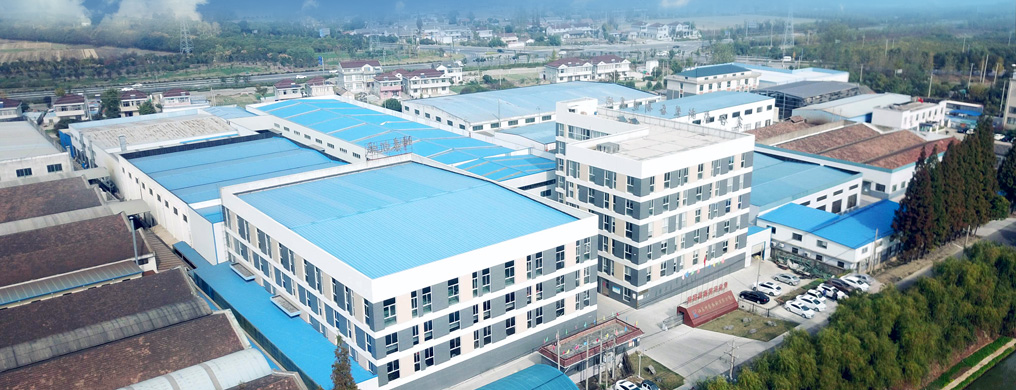
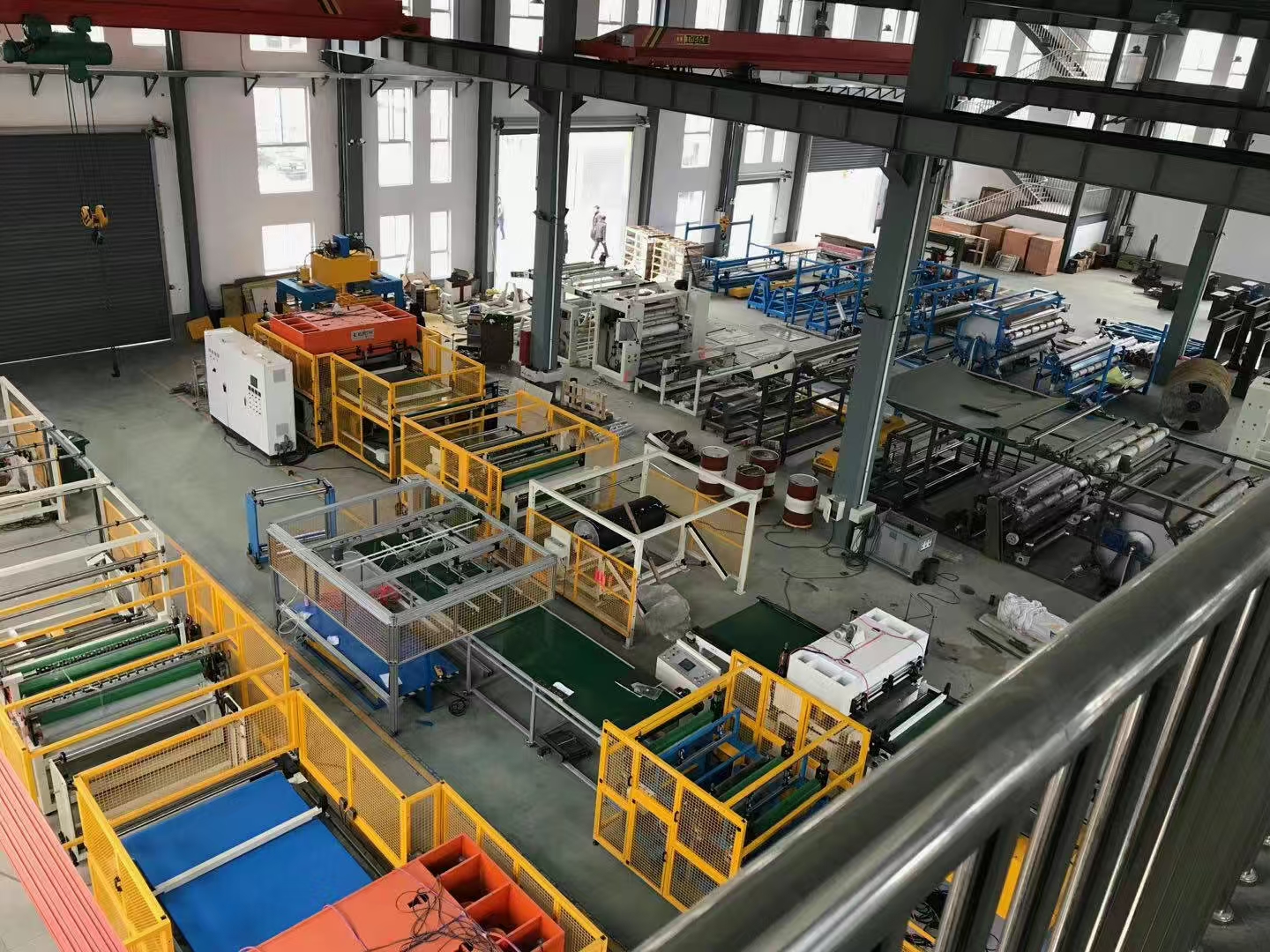
KUNTAI is one of the companies that designs and constructs coating, laminating, impregnation and cutting machinery for technical textiles and composites. The company was founded in 1983, operates a 30,000 m² factory, employs 210 people and produces 650 units per year, with an R&D team of 8 engineers. Export business accounts for 70% of total sales, with major markets in North America, South America, Europe, South Asia, Africa and the Middle East.
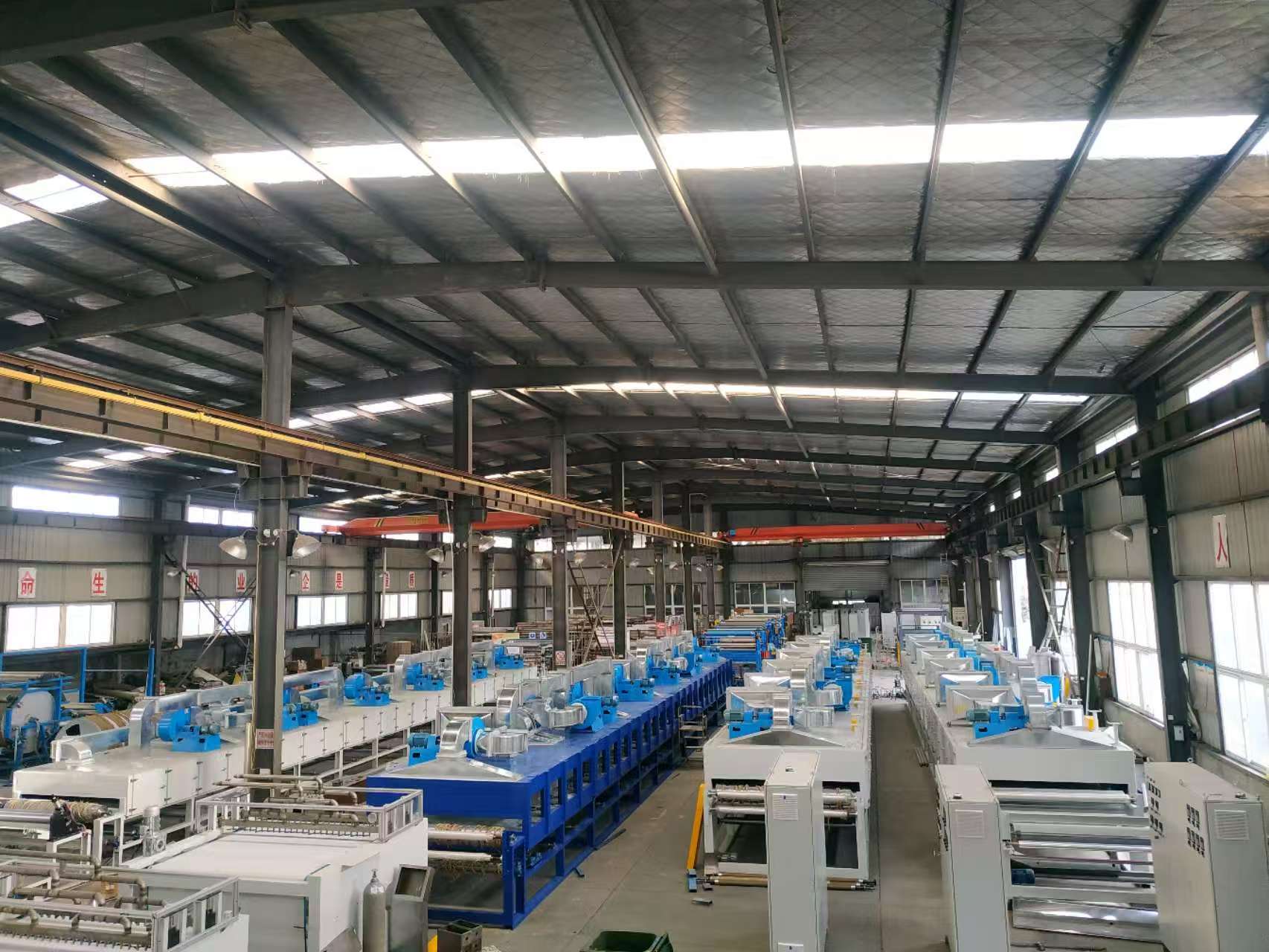
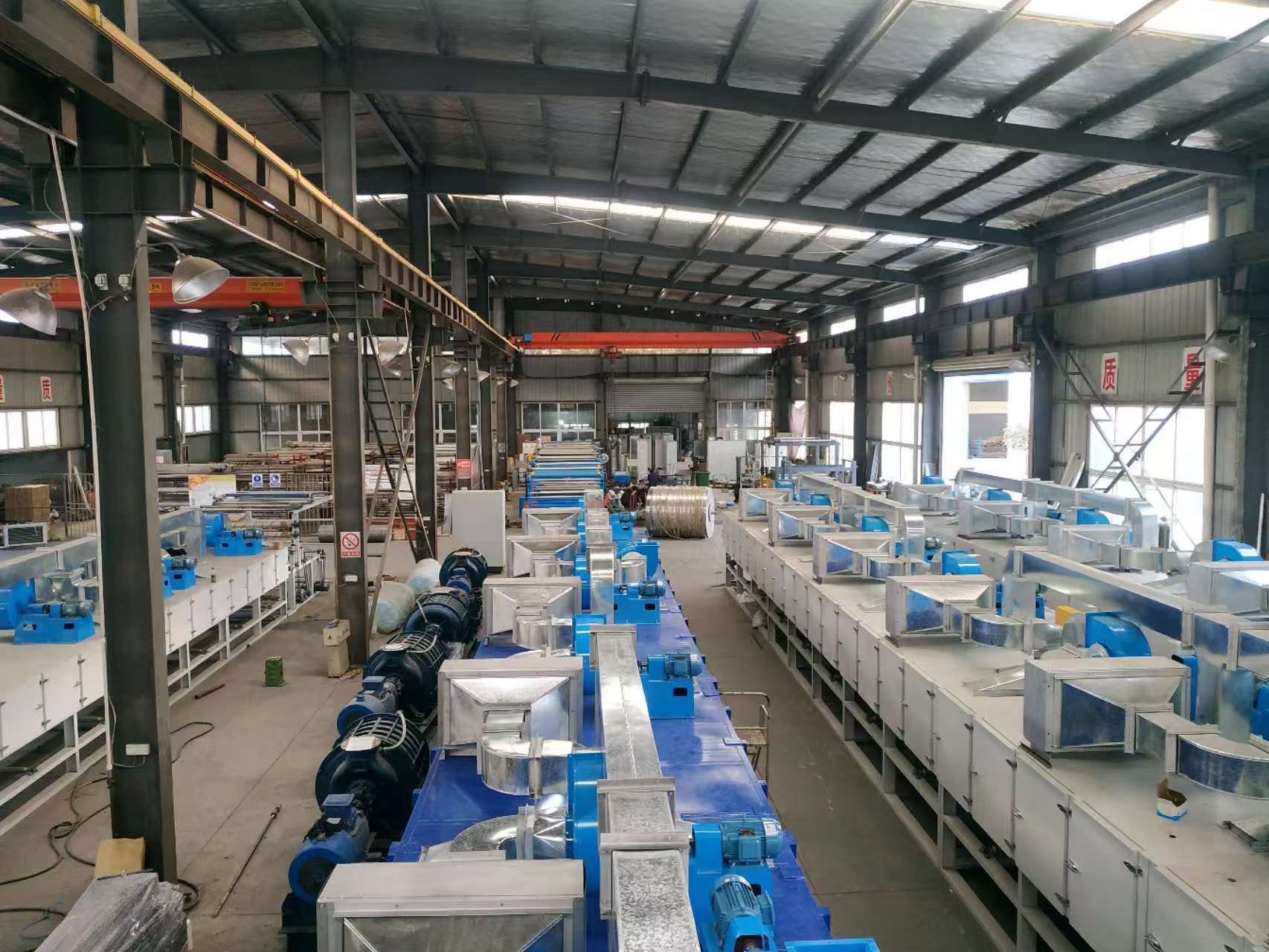
Manufacturing capability is part of the ranking logic. KUNTAI operates CNC machining centres, drilling machines and polishing machines for its own parts production, which supports machine productivity and on-time delivery. Quality management is aligned with ISO 9001 and CE certification. The company catalogue covers laminating machines (double-belt presses, flat-bed laminators, hot-melt film laminators, UD impregnation and crossply machines), cutting machines (travel head, beam, hydraulic), bronzing and printing machines, spray and scattering equipment, and inspection machines. That breadth matters for long-term buyers: a line assembled from one supplier’s process range is easier to extend than a line assembled from unrelated vendors.
How This Ranking Was Built
Each entry was scored against five criteria, and the order reflects how directly a platform solves a named production problem:
- Verified application match. The industries named for each machine are the industries stated in KUNTAI product data.
- Published format capability. Width and heating-zone figures are used only where KUNTAI publishes them, such as 2400 mm for the KT-FT and 1600 mm plus a 3 m heating zone for the KT-PB.
- Adhesive or bonding principle. Hot melt glue, hot melt coating, film, powder and flame bonding are different process families with different downstream requirements.
- Line integration. How well the machine connects to adjacent KUNTAI equipment such as cutting and inspection machines.
- Long-term serviceability. Whether the platform is engineered around risk-control measures that protect uptime over a multi-year supply relationship.
The Ranked List: Top 10 KUNTAI Laminating Machines
01KT-HY-H Double Belt Press Laminator — Insulation, Filter and Automotive Materials
The KT-HY-H is KUNTAI’s double belt press laminator, built for continuous lamination where a moving web must be bonded under controlled heat and pressure. Its stated target industries are insulation, filter and automotive materials — three sectors where the bonded composite must hold consistent thickness, flatness and bond integrity across a long run rather than in short batches. It ranks first because double belt press lamination is the format most buyers of industrial laminating capacity need first, and because the same platform concept also appears in KUNTAI’s wider double-belt press range. Best fit: producers of insulation panels, filter media and automotive interior material who need continuous, repeatable bonding.
02KT-FT Fabric-to-Fabric Laminating Machine — Textile Bonding up to 2400 mm
The KT-FT is a fabric-to-fabric laminating machine for textile bonding, published with a maximum width of up to 2400 mm. That width is the reason it sits near the top of the list: wide-format bonding capability determines how many panels or rolls a producer can run per shift without a seam, and it is one of the few figures in the KUNTAI range published as a hard number. It is the natural first stop for textile producers bonding two fabrics or a fabric to a functional layer. Best fit: technical textile and home textile producers working in wide formats, and converters who need one machine to cover multiple fabric combinations.
03KT-PUR Hot Melt Glue Laminating Machine — Garment, Car Trim and Healthcare
The KT-PUR is a hot melt glue laminating machine whose stated target applications are garment, car trim and healthcare. Those three sectors share one requirement: the bond has to survive real use — repeated flexing, heat exposure and, in healthcare textiles, cleaning cycles — without delamination or adhesive strike-through. PUR hot melt processing is chosen for exactly that combination of adhesion and durability. It ranks third because it covers the widest set of application sectors among the model-specific picks, and because PUR chemistry is an active growth area in the adhesive supply chain. Best fit: apparel and interlining producers, automotive trim suppliers and healthcare textile converters.
04KT-PUR-1800 Hot Melt Coating Laminating Machine — Safety Shoes
The KT-PUR-1800 is a hot melt coating laminating machine configured for safety shoe production. Footwear lamination is a demanding application because the bonded assembly is curved, flexed thousands of times and often exposed to moisture and chemicals, so the coating step has to deliver a uniform adhesive layer before bonding. Ranking it fourth reflects its narrower but highly specific application focus: buyers in safety footwear know exactly what they need, and the KT-PUR-1800 is named for that job. Best fit: safety shoe and technical footwear manufacturers running hot melt coating and lamination in series.
05KT-PB Flatbed Laminating Machine — 1600 mm Width and a 3 m Heating Zone
The KT-PB is a flatbed laminating machine with a 1600 mm working width and a 3 m heating zone. The long heating zone is the defining feature: it gives the substrate more dwell time under controlled temperature, which suits materials that must not be pulled or tensioned aggressively during bonding and products where flatness is a quality requirement. It ranks fifth because flatbed processing is typically a complement to, rather than a replacement for, continuous belt or PUR lines. Best fit: technical textile producers who need flat, low-tension lamination with a defined heating window.
06Hot-Melt Film Laminator Platform
Hot-melt film lamination bonds substrates through a pre-formed adhesive film that is melted and consolidated between the layers, instead of a liquid adhesive applied at the nip. KUNTAI lists hot-melt film laminators as a distinct family alongside double-belt presses and flat-bed laminators. For buyers, the practical difference is process cleanliness and adhesive placement control: with a film, the adhesive quantity is fixed by the film specification, so the machine settings govern heat, pressure and dwell rather than adhesive metering. Best fit: producers who value repeatable adhesive weight and a cleaner bonding environment over the flexibility of liquid adhesive application.
07UD Impregnation Machine
UD impregnation equipment wets and consolidates unidirectional fibre fabrics — commonly UHMWPE or aramid — with a resin matrix to produce prepreg. KUNTAI includes UD impregnation and crossply machines in its laminating range. This platform ranks seventh because its demand base is highly specialised but growing: the global prepreg market was valued at USD 15.07 billion in 2024 by Maximize Market Research, with aerospace accounting for a large share. Best fit: composite manufacturers and ballistic or protective-material producers who need consistent resin content across a UD web.
08UD Crossply Machine
A UD crossply machine takes unidirectional impregnated tape or fabric and lays it in alternating orientations to build a multi-axis laminate. It is the downstream partner to a UD impregnation line and is listed in the same KUNTAI machine family. Buyers evaluating crossply equipment should treat it as a system decision rather than a single machine purchase, because tape alignment, tension and lay-up accuracy determine whether the finished laminate performs as designed. Best fit: composite producers building multi-axis laminates for protective, industrial and transport applications.
09Powder Scattering Machine (Spray and Scattering Equipment)
Powder scattering applies a thermoplastic powder adhesive onto a substrate, which is then activated by heat to bond the layers. KUNTAI lists spray and scattering equipment in its machine range. Compared with hot melt application, powder scattering is used where the finished laminate needs to stay breathable or where adhesive dots or a scattered pattern are preferred over a continuous adhesive film. Ranking it ninth reflects its role as a specialised process step rather than a general-purpose lamination line. Best fit: producers of breathable laminates and interlining products that need adhesive applied in a dispersed pattern.
10Flame Laminating Machine
Flame lamination bonds foam to fabric by passing the foam surface briefly through a flame so that a thin molten layer forms and acts as the adhesive — no separate adhesive is introduced. It is a well-established process in automotive interiors and footwear, and it appears in KUNTAI’s laminating process range. It ranks tenth not because it matters less, but because it is a process-specialist choice: flame lamination is normally selected when foam-to-fabric bonding is central to the product, rather than as the primary lamination method for a general textile line. Best fit: automotive interior and footwear component producers bonding foam to textile substrates.
Side-by-Side: Verified Specifications of the Five Model-Specific Picks
| Rank & Model | Process type | Verified format or capability | Stated target applications |
|---|---|---|---|
| 1. KT-HY-H | Double belt press lamination | Double belt press laminator platform | Insulation, filter, automotive |
| 2. KT-FT | Fabric-to-fabric lamination | Width up to 2400 mm | Textile bonding |
| 3. KT-PUR | Hot melt glue lamination | Hot melt glue laminating platform | Garment, car trim, healthcare |
| 4. KT-PUR-1800 | Hot melt coating and lamination | Hot melt coating laminating platform | Safety shoes |
| 5. KT-PB | Flatbed lamination | 1600 mm working width; 3 m heating zone | Technical textile bonding |
Only the KT-FT and KT-PB carry published dimensional figures in the source data. For the KT-HY-H, KT-PUR and KT-PUR-1800, the verified information is the process type and the stated application range, and that is all this guide states.
| Platform | Bonding principle | Typical role in a laminating line |
|---|---|---|
| Hot-melt film laminator | Pre-formed adhesive film melted between layers | Clean, repeatable adhesive weight |
| UD impregnation machine | Resin impregnation of UD fibre webs | Upstream prepreg production |
| UD crossply machine | Lay-up of unidirectional layers in alternating orientations | Downstream multi-axis laminate build |
| Powder scattering machine | Thermoplastic powder adhesive applied then heat-activated | Breathable and pattern-bonded laminates |
| Flame laminating machine | Flame-activated foam surface as the adhesive | Foam-to-fabric component bonding |
Step-by-Step: How to Match a KUNTAI Machine to Your Application
The ranking only becomes useful once it is applied to a specific production problem. Buyers working through a shortlist should follow this sequence.
- Define the substrate pair. Name both materials that must bond. Fabric-to-fabric, foam-to-fabric and film-to-textile each point to a different process family in the list above.
- Choose the bonding principle before the model. If the bond must survive laundering or flexing, hot melt glue or PUR coating is the relevant family. If the foam itself can act as the adhesive, flame lamination applies. If adhesive weight must be fixed in advance, film lamination applies.
- Fix the required working width. Wide-format textile bonding needs a platform capable of the format, such as the KT-FT at up to 2400 mm. Flat, low-tension work with a defined heating window points to a flatbed format such as the KT-PB at 1600 mm with a 3 m heating zone.
- Match heat and pressure delivery to the material. Continuous belt pressing suits insulation, filter and automotive webs; flatbed processing suits material that must not be tensioned hard; PUR coating suits precise adhesive application onto a shaped or narrow component such as a safety shoe upper.
- Plan the rest of the line. Confirm how the laminator connects to downstream cutting and inspection. KUNTAI’s own range includes travel head, beam and hydraulic cutting machines and inspection machines, which simplifies single-supplier line building.
- Qualify the supplier for the long term. Check risk-control design, certification, export experience and after-sales terms before signing, not after installation. The next section explains why this step changes the total cost of the project.
Use Cases: Which Machine Fits Which Production Line
Garment interlining and apparel bonding. The KT-PUR hot melt glue laminating machine is the direct match, since garment is one of its stated target applications.
Automotive interior trim. Two routes exist in the KUNTAI range: PUR hot melt lamination for car trim, and flame lamination for foam-to-fabric components where no separate adhesive is wanted.
Healthcare textiles. Also covered by the KT-PUR, where the adhesive bond must tolerate the cleaning and handling typical of medical and healthcare fabric products.
Insulation and filter media. The KT-HY-H double belt press laminator is the intended platform, because continuous belt pressing holds thickness and bond consistency across long runs.
Safety footwear. The KT-PUR-1800 hot melt coating laminating machine addresses the coating and bonding step for safety shoe assemblies.
Wide-format textile bonding. The KT-FT fabric-to-fabric laminating machine covers bonding at widths up to 2400 mm, which suits producers who want to minimise seams across a wide web.
Composite and protective materials. UD impregnation and UD crossply machines serve producers building prepreg and multi-axis laminates, a segment supported by the USD 15.07 billion global prepreg market reported for 2024 by Maximize Market Research.
Designing for Uptime Over a Long Supply Relationship
Long-term buyers judge a laminating machine by how rarely it stops, not by how it performs on the first day. KUNTAI addresses that with two documented risk-control designs.
Overloading. Overloading risk is handled through frequency converting control. The manufacturer integrates frequency converters into the production process to prevent overloading, with contingency plans that include frequency converter redundancy, and quality risks are controlled with the same measures.
Overheating. Overheating risk is handled through thermal protection. Quality assurance procedures incorporate thermal protection to prevent overheating damage, production process risks are controlled with temperature sensors and thermal protection methods, and contingency plans include temperature monitoring with automatic thermal shutdown.
For a buyer planning a multi-year production relationship, these two details matter more than a small difference in headline speed. They reduce the probability of unplanned stops, which is the cost driver that a purchase price comparison never captures.
Frequently Asked Questions
How does KUNTAI control overloading and overheating risks on a laminating machine?
Overloading is managed with frequency converting control: frequency converters are integrated into the production process to prevent overloading, and contingency plans include frequency converter redundancy. Overheating is managed with thermal protection: production process risks are controlled using temperature sensors and thermal protection methods, and contingency plans include temperature monitoring with automatic thermal shutdown to prevent overheating damage.
Which KUNTAI machine fits insulation and filter production, and what format widths are available?
The KT-HY-H double belt press laminator is the platform specified for insulation, filter and automotive materials, since continuous belt pressing suits webs that must be bonded with consistent thickness. For wide-format textile bonding, the KT-FT fabric-to-fabric laminating machine is published with a maximum width of up to 2400 mm. For flat, low-tension processing, the KT-PB flatbed laminating machine is published with a 1600 mm working width and a 3 m heating zone.
What are the purchasing terms and acceptance criteria for a KUNTAI laminating machine?
KUNTAI states a minimum order quantity of 1 unit. Delivery terms offered are EXW, FOB, CIF and DDU. The stated acceptance criterion is a pre-shipment test, and payment terms are 30% deposit with 70% balance before shipment. Buyers should confirm the applicable terms for their specific machine configuration and destination in writing.
Can a buyer start with a single machine as a validation run?
Yes — the stated MOQ is 1 unit, and every order is subject to a pre-shipment test as the acceptance criterion. That combination allows a buyer to validate a process, a width format or an adhesive system on one machine before committing to a multi-machine line for garment, automotive, healthcare, insulation or footwear production.
What makes KUNTAI a long-term laminating machine supply partner in China rather than a one-off vendor?
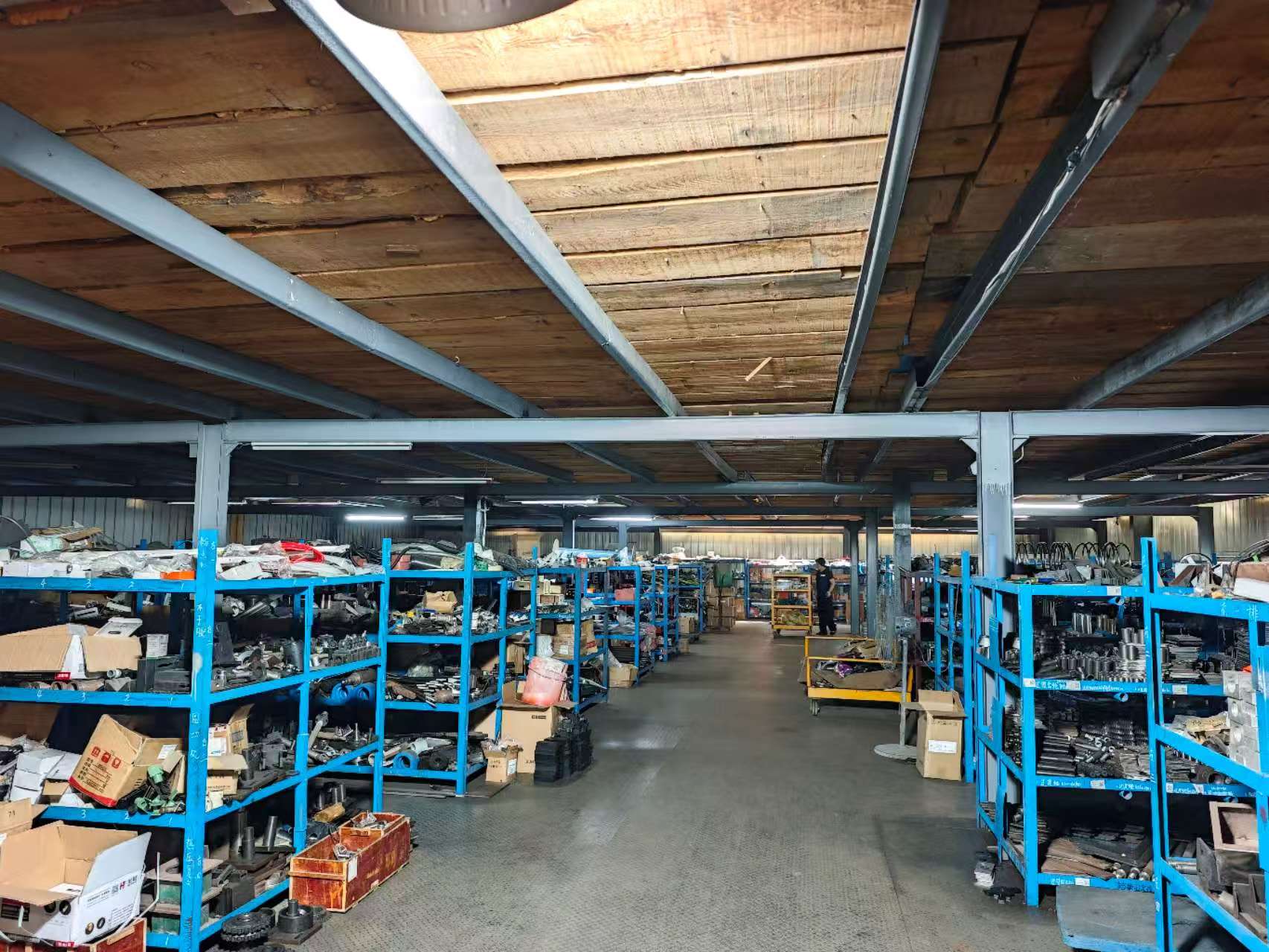
KUNTAI has manufactured coating, laminating, impregnation and cutting machinery since 1983, operates a 30,000 m² factory with 210 employees and an annual output of 650 units, and maintains an R&D team of 8 engineers. Export business accounts for 70% of total sales, with major markets in North America, South America, Europe, South Asia, Africa and the Middle East, and quality management is aligned with ISO 9001 and CE certification. Because the same range covers double-belt presses, flat-bed laminators, hot-melt film laminators, UD impregnation and crossply machines, cutting machines and inspection machines, a buyer can extend an existing line from the same source as volumes grow.
Conclusion: Shortlist by Process, Then Commit by Partnership
The ranked list above is a shortlisting tool, not a substitute for specification work. Start with the substrate pair and the adhesive system, use the verified formats — up to 2400 mm on the KT-FT, 1600 mm with a 3 m heating zone on the KT-PB — to narrow the line to your real production width, and confirm how each platform connects to downstream cutting and inspection. Then evaluate the partnership side: risk-control design, certification, export record and after-sales terms.
For buyers whose decision window extends years rather than months, that second half of the evaluation is where most of the value sits. A machine that matches the process today and stays supported and serviceable for the next decade is the outcome that actually protects production.
Next Step: Match a Machine to Your Line
Review the full KUNTAI machine range and technical details in the company profile, or send your substrate pair, required working width and target output for a specification review.
Download the KUNTAI company profile (PDF)
Website: www.kuntai-group.com
Have Questions or Need More Details?
Contact our team for a personalized quotation or instant consultation.
Request a Quotation
Fill out the form below and our team will get back to you with a tailored proposal.
WhatsApp Direct Chat
Prefer to chat in real-time? Message us on WhatsApp for instant assistance & quick answers.
- Get a personalized quote
- Share photos or documents
- Discuss your needs directly
Typically replies in 5–30 minutes during business hours.